DIGITAL TECHNOLOGY TRANSFORMATION IN LOGISTICS AND TRANSPORTATION

DIGITAL TECHNOLOGY TRANSFORMATION IN LOGISTICS AND TRANSPORTATION

Dr.D.SathishKumar

Assistant Professor

Digital Technologies have spread through among all the areas, and logistics companies are one among the areas. To make the best and efficiency combined with speed and making the movement is the key to success in current competitive advantage.

MAXIMUM ADVANTAGE IN TECHNOLOGY FOR STRATEGIC PLANNING

Many transportation companies invest about 5% of their annual revenues in digital operations, by focussing on their customer interface. In the growing digital world people are using mobile apps for faster solutions, logistics companies to offer a personalised experience for their customers and also find the vehicles accurately by tracking systems. Companies are also focusing on new business models and value added services and innovation solutions to the customers.

Digital Logistics

BIG DATA OPERATION

big-data

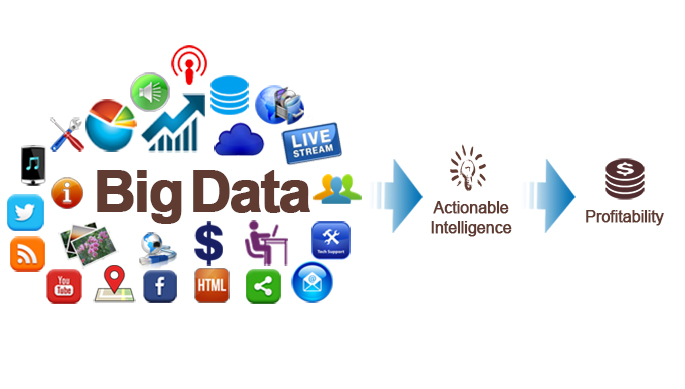
 Big Data technology are used to cut the cost and take real time action, in a competitive environment where margins are small and requires logistics companies to take greater control over their supply chain and ensure the processes takes place seamlessly at greater speed. Logistics companies are using big data technology for analysing capture the data and streamline the operations and improve the supply chain.

Data base automation, Automation of load building and optimizing the inbound and outbound movement of cargo, maximum usages of available resources, waste reduction and lean functions.

Real-time fleet management solution facilities specialised of using technology of trucks and other delivery vehicles, utilization of empty containers by matching nearest load. Mobile app solutions enable greater transparency into the operations.

Transparency in inventory and supply chain management system shipment across the supply chain improved tracking of inventory movement, facilitates the reduction of network-wide inventory levels, and enable managers to respond dynamically and in real-time to any events or issues that disrupt the supply chain.

Analytical data makes explicit greenhouse emissions and carbon footprints of truck and machinery operations, allowing companies to take steps to become carbon-neutral, thereby contributing to cause of Green logistics.

Logistics companies apply the wealth of data related to the movement of their goods and trucks to identify patterns related to customer trends, identify what works well, unearth market insights, and gain competitive advantages.

SECURITY THROUGH DIGITAL TECHNOLOGY

Supply chain problems are the main risk in global business environment for logistics companies. Technology enables the supply chain in many ways.

Digital Locks make the inventory more secure, offer a robust layer of security, in additional to physical security. Optimal route planning combined with real time tracking of cargo movement through mobile apps enable routing of cargo by avoiding congestion points and trouble spots to minimize risks and interruption.

IoT ENHANCE OPERATION

The earliest applications of RFID and IoT (Internet of Things) technology have been in asset tracking and warehouse management. For simple tracking inventory of pallets and crates, enterprises use sensors, RFID and other technology to gather information on the state of the connected item, such as when the thing requires maintenance, the expected life of the thing.

IoT contributes to highly integrated warehouse management solutions, enabling precision movement and accurate tracking of movement of goods. The applications of IoT instruments in logistics are virtually endless, ranging from tracking transportation goods in a temperature controlled way to ensuring the correct package reaches the correct location at the specified time.

HIGH CUSTOMER SATISFACTION

            Proactive transportation and logistics companies go beyond improving their operational efficiency and retaining high control over other operations to enhance customer satisfaction.

            Technology improvement a shift to a customer observed operating model, enabling the delivery of personalised and customer focused logistics with high cycle time.

            Hyper connectivity facilitates not only big data, but also speed data. Speed and timeliness manifesting in seizing the moment enable companies to match customer expectations and deliver competitive differentiation over its competitors.

SCM – A STRATEGIC ADVANTAGE

SCM – A STRATEGIC ADVANTAGE

Dr.B.Sudhakar

Director

Sankara Institute of Management Science

Business breakthroughs don’t just happen by accident.  They come from the keen insights derived from learning the latest concepts, sharing in the experiences and best practices of others, and understanding changes in the evolving business environment. Supply chain management is the latest buzzword in the management arena. A network of facilitators and distributors who perform the functions of procurement of materials, transformation of materials into semi-finished or finished products, and the distribution of the finished products to customers is known as a supply network. Supply chain is common for both manufacturing and service industry. The complexity of the supply networks varies from industry to industry and the magnitude of the industry.

A very simple ideal supply chain for a single product is one where the raw material is procured from vendors, transformed into finished goods in a single step, and then transported to distribution centres and ultimately to the customers. But in reality supply chains have multiple end products with shared components, facilities and capacities. The flow of materials is not always along the same network but various modes of transportation may be considered and the bill of materials for the end items may be both deep and large. Traditionally, marketing, distribution, planning, manufacturing, and the purchasing organizations along the supply chain operate independently. Organizations set their own objectives and these are often conflicting. An organisation’s marketing objective of high customer service and maximum sales conflict with the manufacturing and distribution goals. Many manufacturing operations are designed to maximize throughput and lower the costs with little consideration for the impact on inventory levels and distribution capabilities. Similarly purchase decisions are done with available information. The result of these factors is that there is not a single, integrated plan for the organization whereas it resulted in as many plans as the businesses. Thus there is a need for a system through which the different functions can be integrated together. Supply chain management is a strategy through which such integration can be achieved, where the entire material flow is owned by a single firm and the various channel members operate independently. Therefore coordination between the various players in the supply chain is imperative for its success and effective management. A team is more competitive when each player knows how to be positioned.

Thus organizations are focused on building strong supply chain channel members and built their relationships to make a coordinated effort to win the competition. Today competition is between the supply chains of the organizations rather than the individual company. Hence Supply Chain Management has become a strategic advantage for organizations in the competitive world.

India an Retailing Hub

India an Retailing Hub

Dr. Priya Kalyanasundaram 

Professor

Sankara Institute of Management Science(SIMS)

Indian Retailing sector has become one of the booming sectors with a market size of USD 585 million and it is expected to grow reach 1080 million by 2020. This sector is experiencing growth, not only in major cities and metros, but also in Tier-II and Tier-III cities.  The major players FMCG are focusing more on rural market. With an increasing investment in infrastructure, retailers would be able to increase their access to high-growth potential rural markets. India’s ecommerce market is expected to become the world’s largest market. The retail industry’s business to business (b2b) is expected to reach US$ 700 billion by 2020 and business to consumer (b2c) is to reach US$ 26 billion.  With this increasing trend many Multinational companies like IKEA, Amazon, Wal-Mart, Bong and Olufsen have started investing in India.

Investment Analysis show that,

  • IKEA has purchased 14 acres of land in Bangalore for setting its third retail outlet in the country.
  • Future group has entered into a joint venture with Khimji Ramdas group in Oman.
  • Amazon has planned to double its storage capacity in India.
  • Bong and Olufsen , Danish stereo and speaker system maker has a plan for selling 8 to 10 standalone satellite in cities like Kolkotta, Hyderabad , Ahemdhebad .
  • Amway India has planned to open 50 retail stores by 2018 for enhancing direct and online sales of its products.
  • The world’s largest spirits maker Diageo, has planned to open a new business services centre in Bengaluru and give employment to 1,000 people, by end of 2017 .
  • Marks and spencer has plans to open annually 10 new stores in joint venture with Reliance Retail by 2017.

Government Initiatives

         Government of India has taken many initiatives for the growth and development of the retail sector. Until 2011 FDI was not permitted for multi brand retail or in any other retail outlet in India. Only during January 2012 Indian government allowed 100 per cent foreign Direct Investment and the growth of the Indian retail industry got accelerated. It  has approved 51 per cent  of FDI in multi-brand retail and increased FDI limit to 100 per cent (from 51 per cent) in single brand retail, and also has a plan  to allow 100 per cent FDI in e-commerce, under the plan that the products sold must be manufactured in India so to gain from the liberalised regime. The Government has changed the Foreign Direct Investment (FDI) rules in food processing, in a bid to permit e-commerce companies and foreign retailers to sell Made in India consumer products.  As per Indian Council for Research on International Economic Relations (ICRIER) prediction the Indian economy will grow by 13 percent for unorganised sector and 10 percent for organised sector. In India organised Retail Penetration (ORP) is only 8 – 10 per cent which is low in 2017 compared to other Countries US (85) Per cent which indicates strong potential for organised retail in India. Organised retail in India is growing at CAGR of 20- 25 per cent per year and it is expected to reach 18-20 per cent by 2020 and unorganised retail would hold a major 80- 82 per cent share. Food and grocery segment by 2020 is expected to account for 66 per cent of the total revenue followed by apparel segment readymade garments and western outfit has been growing at 40 -45 per cent annually. India has replaced China in retail sales in 2017 and it is also expected to double by 2020.

Path Ahead

  The Indian population is going towards online retail in a big way. As today’s consumers are keener towards online shopping. The online retailing is expected to grow to US$ 70 billion during 2020. E-tailers have started using creative ideas to keep the consumers always connected with them. So E-commerce industry is one of the fastest growing industries and it is bringing a revolutionary change in the retail industry. Many technology stores in India are focussing to integrate physical and online stores and trying to develop analytical model to understand the customers and to manage the supply chain.

COMMUNICATION ANXIETY: FEAR OF STAGE FRIGHT

COMMUNICATION ANXIETY: FEAR OF STAGE FRIGHT

– Nishanthi.S

 Professor

Sankara Institute of Management Science

Communication Anxiety is found everywhere. The best part about this is that it can be cured. An action that is intended to deceive, I mean no tricks here, and no Sanskrit mantras. All one need to do is just understand why this is scary and need to look at it in a different aspect and let it go away from us.

Normally people suffer from this when speaking to groups is pretty normal. Most of the people are suffering from it, and let us make this clear – Anxiety is nobody’s friend. Yet, we must notice that it’s not the same for everyone among us.

By many people it is said that this Communication anxiety can be cured if they can talk, if they communicate. But many believe that communication is a skill you’re born with – so if you don’t have it, you’re out of luck.

Few people are really comfortable when they speak to peers, and totally uncomfortable with the strangers. And for the rest of the people it is vice versa and they are comfortable with strangers because they will not meet them again but not with their peers, thinking and bothering about maybe they will find faults in them.

Communication anxiety is found with everyone who has some form of it. So now we should see does it really matter??!!!!! Yes indeed it does. The anxiety interferes with so many things in our life like studies and work place in that matter because we are here so much worried about others and finally avoid speaking and can lead to stress that will ultimate effect the entire of ourselves.

People say there is a logical way to banish anxiety that helps to completely get rid of this communication anxiety. It is quite easy to come out of it but not necessarily easy because we’ve been doing what comes naturally – that is, worrying about looking bad.

The important thing to keep in mind always is to focus on yourself to focusing on what you want to do. It’s natural to think about ourselves. But that means it’s natural for everyone else to be thinking about themselves, whatever the reason for looking at them. Yes, even if they look angry at us and that is how it makes us feel.

There are some ways to practice to avoid this. Try listening to a short news item on the radio from beginning to end without wandering off to think of something else. Practice to repeat something you have by heart for a minute mentally. See if you can give your full attention to the server when they tell you the day’s specials. Look, listen, process, without doing or thinking anything else.

Communication anxiety can be set out by developing an effective Communication, which is a learned skill, just like riding a bike. The more you practice, the better you become. Effective communication is about listening, ensuring others get your point, and persuading others to take action on what you’re saying.


BIG DATA AND BUSINESS

BIG DATA AND BUSINESS

K.Thirugnana Sambanthan

Professor,

Sankara Institute of Management Science


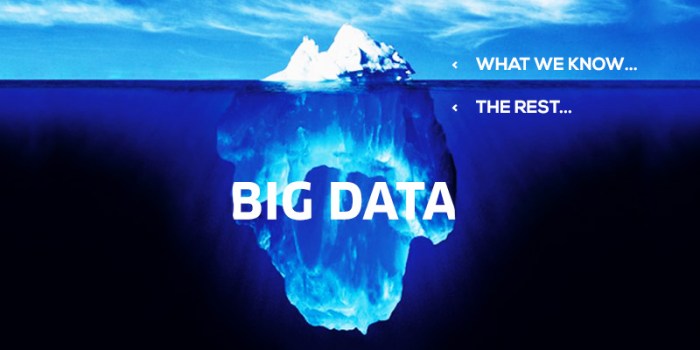
Big Data is a term used to depict collection of data that is enormous in size and yet increasing exponentially with time. A data is so large and complex that none of the traditional data management tools are able to store it or process it efficiently. Bigdata can be categorized into three: Volume, Velocity and Variety.

big-data.jpg


Volume: Organizations collects the data from relative sources, which includes business transactions, social media and information from sensor or machine-to-machine data.

Velocity:  Data streams unparalleled speed of velocity and have enhanced in timely manner. RFID tags, sensors and smart metering are driving the requirement to deal with torrents of data in real time operations.

Variety: Data comes in different form of structured, numeric data in traditional databases to unstructured text documents, email, video, audio, stock ticker data and financial transactions. Bigdata based on variety is categorized into Structured, Semistructured and Unstructured.

 The challenges in Big data is data analysis, search, sharing, transfer, visualization, querying, updating , information privacy, capturing and storage of data.

Examples of Big data : Facebook, Whatsapp, Stock Exchanges, Transportation.

 Word Cloud "Big Data"

 Importance of Bigdata

Each and every company has its own way of using data. If the company uses the data more efficiently it will have more potential to grow. The company can collect efficient data and it can analyze it effectively.

  1. Bigdata can help in creating new product since the needs and want of the customer can be clearly analyzed and tabulated.
  2. Bigdata helps in analyzing the market condition correctly thereby gives a competitive edge over the Business competitors
  3. Bigdata can do sentiment analysis. It gives correct feedback about the customer’s perception and  it also contains tools which can help in improving the online presence of the company.
  4. Big data can bring cost advantage to the business since large amount of data are to be stored and the tools provided by Bigdata helps in enhancing the Business effectively.
  5. The tools of Bigdata helps in Time Reduction since they can process large amount of data quickly.  This helps in quick decision making


 yourstory_BigData


Role of Bigdata in Business

Every big business organization requires precious data and insights. Big data plays a very vital role in finding the target customers tastes and preferences. Bigdata can help in predicting Customers needs. Bigdata helps in achieving Business Goals. Bigdata can help the organization to advise relevant products and services to the customer.  Bigdata helps in making Strategic Decisions.  Bigdata helps in maintaining operational efficiency in an Organization.

Internet of Things(IOT) and BigData are the vital technologies in the current Business World.


Paper currency: Past to Present

Paper currency: Past to Present

Saravanan.S

Professor

Sankara Institute of Management Science

The popularity of India as nation has gained significant popularity in recent times. This popularity is due to the bold decision of central government to make high denomination Rs 500 & Rs 1000 not valid medium of exchange. High denomination currency has always been the subject of debate in function of economy. To understand the currency we have to travel back in time to explore the evolution of currency.

In ancient times the mode of exchange was the coin minted in silver or gold. The first Indian coins were minted in 6th century BC by Mahajanpadas. These coins do not have fixed shape which was made up of silver with several symbols. This practice created a monetary system in the kingdoms of India.

Pre independent India currency

During the British rule in India, the Paper Currency Act of 1861 gave British the monopoly to issue notes in India. The 1867 Victoria portraits series were issued in the country for effective control of illegal currency. The series of first British Indian notes were of Rs.10, Rs.20, Rs.50, Rs.100 and Rs.1000. In 1903 additional currency were issued with Rs.5 as the lowest denomination. Due to the World War 1 paper currency of Rs 1 was introduced in 1917. In 1923 the King portrait series was started with Rs.5, Rs.10, Rs.50, Rs.100, Rs.500, Rs.1000 and Rs10,000.

In 1935, Reserve bank of India was setup to manage the currency system. In 1938 RBI issued first Rs.5 note with additional denomination of Rs.10, Rs.100, Rs.1000 and Rs 10,000 were issued. In 1940 Rs.1 was reintroduced followed by Rs.2.

Independent India currency

In 1953 Hindi was displayed in the new notes and name Rupiaya was changed to rupee. In 1954 Rs.1000, Rs.5000, & Rs 10,000 were reintroduced. In 1957 the rupee was decimalized and divided into 100 paisa. Due to shortage of paper in 1960’s the size of the notes were reduced. In 1980 the success of Aryabhatta, RBI issued new notes citing the advancement in science and technology in Rs.1, Rs.2, Rs.5, Rs.10 & Rs.20.

In 1996 the new Mahatma Gandhi series notes were issued from Rs.10 to Rs.500. It replaced all the notes in circulation. The new notes had changed watermark, security thread, latent image and intaglio feature for the visually handicapped. In 2010 RBI adopted as the official symbol for the Indian rupee.

Demonetized Indian currency

Due to increase in corruption and black money of high value currency and the suffering of economy, the government decided to demonetize the currency in 1978. Higher than Rs 100 were taken out of circulation and major haul in banking system were undertaken. Due to the shortage of currency note the RBI issued the Rs.500 in the year 1987 and Rs.1000 in the year 2000 for smooth flow of transactions. In 2016 the government of India again opted for demonetization of the high value currency to curb the high level of fake currency, corruption & black money. Future of the currency system will determine the growth and strength of the economy.

FLIPKART GLOBAL

FLIPKART GLOBAL

Dr.D.Sathishkumar

Professor, SIMS

Flipkart is the one of the Largest E-Commerce firms in India. The new plan of Flipkart is to sell their products all over the world, which includes 190 countries initially with the support of e-bay India subsidiary. The new plan called Flipkart Global will allow over 100,000 sellers on Flipkart platform to sell their products online over 190 countries globally.

The new plan will enable sellers to export their products globally and introduce new products with Flipkart platform to access all the countries in the world. This new plan aims to bring the products to India from other parts of the world like Amazon India, who launched the Global store two years back offering fashion brands, books and other electronic products from US market to Indian market.

This new plan will enable sellers from India to access all over 171 million active customers of e-bay over 190 countries in the international market. The other strategy of Flipkart is to increase the popularity with few millions of non-resident Indian online shoppers globally who like to access the Indian products.

More than 25000 sellers on the e-bay India platform will join flipkart platform. Flipkart plans to undertake a nationwide campaign to promote more sellers to export their products to international platform.

The launch of Flipkart Global will lead India to be one of the leading online retailers in global market with local products, and enabling trade to help generate both direct and indirect employment opportunities and bring in much needed foreign exchange.

HIGHER EDUCATION IN INDIA

HIGHER EDUCATION IN INDIA

Dr. S. Sundararajan, Professor

Sankara Institute of Management Science

Higher Education in India is going through a positive transformation. We see a trend where student aspirations & industry expectations are on the rise. Further a churn is happening as the regulatory mechanisms are becoming more stringent which will lead to the survival of the fittest. Thus many of the institutions that came into existence during boom time with super infrastructure and modern facilities are unable to sustain the test of time in the absence of qualified faculty and proper intellectual resources.

A current trend that is visible is that many students desire that higher education programmes should lead to confirmed employment opportunities. They are not satisfied that degrees at the Bachelor’s level or Master’s level merely equip them with fundamentals and they need to further their skills to get good jobs. Thus we are seeing a change wherein courses in Engineering, Management and even Charted Accountant include a component of soft skills, digital literacy to make them more employable. As faculty fraternity we, strongly feel that both the Engineering & the MBA programmes in their current format have reached saturation point and need to be reinvented for survival in the long run. The demand for doing an Engineering degree would continue; however the aspiring students would be choosier about where they would like to study. This means the institutions with a good brand value would be in greater demand. Further the student would also seek options that combine a niche area along with his core area of study such as MBA(IT) with specialization in Data Analytics. We also see a trend wherein the integrated kind of programmes are becoming more popular, for example B.Tech., plus MBA done in 5 years or the 5 year integrated B.Com., LLB., course in Law. Another trend is the increasing popularity of architecture & design as standalone careers. The demand for B.Arch and B.Design graduates has gone up significantly in the last 5 years and the aspirant’s numbers have multiplied exponentially.

The MBA programme too has reached its pinnacle of glory and now is under scrutiny and review. Here too the aspirant has become more choosy and would like to join a preferred institution of his choice based on its brand value. Further, aspirants are now clearly seeking outcomes which are measurable at the end of the course i.e. they are almost expecting an employment guarantee. New MBA specialization’s such as digital media marketing, big data analytics are attracting more students but there is a shortage of seats for these areas of study. Further the MBA market has become extremely price sensitive. Besides the minimum expectations of a student, the students expect a fully wired campus, online learning modules, plenty of industry interaction, grooming & etiquette sessions to make them better equipped to cope up with the demands of industry. Further we see a lot of modified versions of the part time MBA courses offered through online and off line modes, which are in the infant stage and they need to establish themselves.

Excellence in Higher education & high quality is only possible if we have the best of faculty with industry experience. The most important step that needs to taken at the macro level in our country is to position teaching as an attractive option & should be given its place of pride as an employment option. Miserable but true, the teaching profession is often seen as a last choice career option. As a consequence of this, many people who are in the teaching profession are not into it whole heartedly. This has a direct bearing on their performance and willingness to develop further. Fortunately, in recent times there is a lot of emphasis on teacher education in educational institutions. This includes equipping them with new skills such as the use of multi-media, online learning and teaching tools & presentation skills. These efforts have significantly improved the quality of teaching and made a positive impact on the absorption levels of the students. However this puts in an extra pressure on the teachers who are already over worked and underpaid. Further in many institutions of higher education, many retired persons from industry seek a second career. Though they come with a lot of rich experience, the capacity to take on heavy work load is limited. Here the challenge is to continuously encourage teachers towards self development and also look at the changing tools, techniques & pedagogy more positively. Thus the need of the hour is to position teaching as a premium career option and provide best facilities similar to those we see at the corporate.

The biggest positive move we see is the availability of varied courses at the higher education level that are delivered by private universities that are recognized by UGC. This leads to more avenues and more streams of learning and specialization for the students thus satisfying the industry need for specific qualified professionals.

Endnote:

In India, higher education will see more exciting trends & shifts in time to come. We faculty fraternity should update the syllabus and curriculum of professional courses on the requirement of corporates in the global competition.

The Importance of English Communication

The Importance of English Communication

Dr.B.Sudhakar,

Director SIMS.

In most of the business schools subjects are being taught in English, it is absolutely necessary for every business student to be familiar with English and its ocean of vocabulary. They should know how to communicate in English as it is the need of industry.

Aspiring to speak good English is no way a crime. If any one understands the importance of English communication, he or she will sweat for it and the rewards will be unimaginable. But speaking English is not a cake walk. One should remember the golden rule- “No pain, no gain”. There is no short cut to acquire this skill. Whoever takes efforts, undoubtedly there will be fruits.

Involvement of students is the need of the hour in improving English communication. Students should take initiative to improve their English communication skill. They should read, write and speak in English inside the campus and even in their homes. They should watch English movies and news to improve their listening skills. Student should get monitored on their performance for improvement.

What is “Communication?”

Communication is a tool people use to express their thoughts, needs, desires and what not. There are two types of communication. One is verbal communication and the other one is non-verbal communication. People use words for speaking and writing, which is known as verbal communication. Whereas when people use gestures, facial expressions, signals and body language to communicate their ideas is called as non-verbal communication.

Pillars of Communication

Reading, writing, listening and speaking are the four invaluable pillars of communication. If anyone wants to master the art of communication, he or she should practice the said four skills persistently. Many of us want to speak English fluently. But we ignore reading, writing and listening. The reason is, we don’t know the importance of these skills. Without reading, how can one improve vocabulary power? By not writing, how does one believe that he or she can rectify grammatical errors? How does one can know the art of framing sentences? How do we improve our English pronunciation and accent, without listening? If anyone who can concentrate on reading, writing and listening skills, it is needless to say that he or she will get the knack of speaking effortlessly.

Developing Habits

It is better to develop the habit of reading every day. One should read any newspaper, magazine or any story book for at least fifteen minutes in the morning and evening. This habit will make an individual to be familiar with many words and patterns of sentences. The more words one knows, the more fluency one will get.

It is very difficult to avoid one’s mother tongue influence (MTI).Those that aspires to speak English, should avoid their mother tongue while speaking with others, as possible as they can. Hearing television news in English, will improve the quality of one’s listening skills. Seeing English movies, television debates in English help one to learn the pronunciation techniques and accent. For students, their campus is the best place to improve their speaking skills. At home, they should prefer English as their speaking language with their parents, friends and relatives.

Significance of a Dictionary

Without a Dictionary, one cannot improve his or her English language skills. It is very important to keep a Dictionary nearby while reading or writing. Since all of us are non- native speakers, it is very difficult to understand the meaning of words. To understand the meaning and usage of words, one has to refer a Dictionary. Reading and referring Dictionary is an inevitable part of language learning process. Learning a Dictionary is a habit to be nurtured.

Internet is a Boon

Present day learners are very fortunate. They have “Google” in their hands. Anyone can surf internet and find its help to know the meaning of a word, proof read and spell check. There are innumerable websites available in the cyberspace. What we need is the fire to use the available resources.

To succeed in Communicative English, there are three words to be remembered. Those words are the mantras for success. They are….. Action…..Action…..Action.

SOCIAL MEDIA IN THE MODERN WORLD

SOCIAL MEDIA IN THE MODERN WORLD

Prof. G. Sivaranjani

Sankara Institute of Management Science(SIMS)

Social media is playing a predominant role in today’s modern scenario. The growing popularity of social media network & applications creates positive as well as negative impact in the society. Impact of social media can be felt by individual & social groups. Social media is term used to describe the interaction between the individuals and groups. They use the social media to share information, messages, images, videos & audios etc.,

Today’s children are growing up with surrounded mobile devices and social networking websites such as face book, twitter , my space, linked, google+, youtube, Instagram & so on. These sites create positive as well as negative in the mind of all age group of people. There are number of positive impact & benefits of social media.  It can connect people around the globe as world has now became like a village, it can act as a tool to share information relating to politics , culture , religion , patriotism , agriculture , economy, arts & heritage of a country etc., Social networking websites are also acting as a platform for many people to create, innovate & expand their business globally.

Negative impact of social media includes a sort of addiction & restless feeling towards the websites. It also pressurises the people to adapt a different lifestyle and culture which is totally difficult. Young people face the risk of disclosing their personal information to the world which predominantly leads to suicide in many cases. Young minds are being distracted & deviated in a negative way. Therefore, it is imperative to exercise control over social media.