Restructuring: Tata Motors rolls out VRS, moves to a flat five-level hierarchy

Restructuring: Tata Motors rolls out VRS, moves to a flat five-level hierarchy

Dr. S. Gowri , Senior Professor

Sankara Institute of Management Science(SIMS)

Tata Motors, India’s largest automobile maker, has started rolling out a voluntary retirement scheme (VRS) for its employees as part of its organisational restructuring exercise. This is part of a human resources (HR) restructuring drive that is expected to transform the organisation into a much leaner company with a flat hierarchical structure. The new structure will be in place from April 1.

So far, less than 500 executives have been offered VRS, which roughly includes one year’s salary, among other benefits, sources said. The company, however, did not confirm the details of the VRS package or how many were offered VRS.

A company spokesperson said: “Tata Motors confirms that as part of the ongoing organisation effectiveness project, where we have already finalised the top two levels of our management structure, a proposal on VRS package has been presented and approved by the board. Since the exercise for selecting L3-L5 is still underway, it is premature for us to comment on any other specifics at this point in time.”

From a 15-16-level hierarchy, the organisation is moving to a flat five-level hierarchy. Earlier, Tata Motors had three levels in the supervisory grade, five in the managerial grade and around six or seven in the executive grade. Now, there will be five grades, L1 to L5, with L1 being the highest. Above these levels, there will be executive directors, presidents and the managing director. The exercise has been completed only for the L1 and L2 levels.

“As part of the restructuring, we have also identified roles, which are best located in a central, common service structure, providing service across the company through optimised and efficient processes. To facilitate this, the number of roles distributed currently across the company is being relocated in the Global Development Centre in Pune. We expect significant benefits in cost, service quality and process efficiencies,” the spokesperson said.

Tata Motors is aiming to become a lean and agile organisation by empowering its business units with clear accountability, strengthening functional leadership and oversight, ensuring faster and effective decision-making, and improving customer focus, the company had said earlier.

Senior employees were made to undergo tests through an assessment centre, and sources indicate there has been considerable realigning of officers in different grades. Analysts say such an exercise is going to cut flab in a large organisation like Tata Motors and enhance accountability.

The company is going through tough times, as its third quarter consolidated profits fell 96 per cent to Rs 112 crore. It has lost market share in the domestic market, from double digits in 2013 to less than five per cent in 2017.

COMMENT ON THE STRATEGIC MOVE OF TATA MOTORS:

Tata Groups, the business conglomerate comprising of more than 100 operating companies spread across six continents, has come out with organizational restructuring to have a lean structure with obvious advantage of enhancing accountability and cost cutting at all levels.

Inspite of the co. being agile with greater flexibility and mobility with regard to performance, productivity, after sales service, customer satisfaction and so-on, may be this approach to amend the existing structure would bring a positive result, but definitely posing a threat and I feel the approach may put to test the human and social capital of the co., and the profitability as well.

This strategic move would definitely brings in cost advantage but we need to think on the functional aspect of all strategic business units located throughout the world where, the function of one SBU may overlap and blur into the role of another SBU causing some confusion, leaving fewer behind-the-scenes power struggles and disagreements.

Further, we can link this to the 7S Strategy of Mc Kinsey model which says, when  there is alignment of Cos. Strategy, Structure, System, Style, Staff and Skills to the super ordinate goals or shared  values of the co. it can lead to a sustainable growth and development.  The proposed change in the structure will be in place from 1st April and we have to wait for the fruitful benefits to be reaped by TATA Motors.

Few examples of commonly used business restructuring strategies are listed here for further reading.

No business can continue to function in the same way forever. With changing times and changing business conditions, restructuring is one of the options for a business to stay on track.   Organizational restructuring involves making changes to the organizational setup. These changes have an impact on the flow of authority, responsibility and information across the organization.

The reasons for restructuring vary from diversification and growth to minimizing losses and cutting down costs. Organizational restructuring may be done because of external factors like merging up with some other company, or because of internal factors such as high employee costs.

  1. Downsizing:

 Downsizing –   also called layoff, rightsizing or smart sizing strategy is about reducing the manpower to keep employee costs under control. (Ex:  Auto -giant General Motors, which in 1991 decided to shut down 21 plants and lay off 74,000 employees to counter its losses.)

Another example is that of IBM, which had never lay off staff ever since its incorporation, but had to lay off 85,000 employees to stay in business.   Downsizing is not always a result of business losses; it may be needed even in cases of takeovers, acquisitions and mergers, where duplicity of the staff propels this form of organizational restructuring.

  1. Acquisition

The business being acquired undergoes major restructuring to get in-line with the organizational setup of the acquiring business. When AT&T acquired BellSouth, BellSouth was restructured to fit into the organizational setup of AT&T. And it wasn’t just BellSouth that was restructured, as AT&T too saw some restructuring to accommodate BellSouth. Altogether, AT&T had to cut down 10,000 employees over a period of three years, following acquisition of BellSouth.

  1. Mergers

Also, when two businesses decide to merge together, organizational restructuring is a must to unite the two distinct organizations into one organization. When Glaxo Wellcome and SmithKline Beecham merged together to form Glaxo SmithKline in 1999, both the companies had to undergo major restructuring, and there was some major downsizing before as well as after the new company was formed.

4.       Star burst

This restructuring strategy involves breaking a company into smaller independent business units for increasing flexibility and productivity. This may be done either to dissect the business into manageable chunks or when the business wants to diversify and foray into unrelated areas. One of the latest examples of this strategy is Pfizer’s decision to spin off four non-pharmaceutical firms this year.

Star bursting may also be used for expansion of the existing business such as when a business decides to spin off subsidiaries to handle business in different geographic areas.

  1. Verticalization

This is the latest in restructuring trends, wherein an organization restructures itself to offer tailored products and services to cater to the requirements of a specific industry. In 2002, HCL verticalized its operations to meet the specific demands of five different industries: retail, media and telecom, manufacturing, finance and life sciences. This type of restructuring opens up avenues for specialization.

  1. De-Layering

De-layering involves breaking down the classical pyramid setup into a flat organization. The main objective of this type of restructuring is to thin out the top layer of unproductive and highly paid ‘white collar’ staff. General Electric has reduced the number of management levels from ten to four in some of its work facilities in order to improve overall productivity.   Hewlett Packard, on the other hand, has de-layered to promote innovation, build customer intimacy and  increase consumer satisfaction. The major advantage of de-layering is that the decision making process becomes shorter and more effective.


  1. Business Process Re-engineering

This type of restructuring is carried out for making operational improvements. It begins with identifying how things are being done currently and then it moves on to re-engineering the tasks to improve productivity. Business process re-engineering usually results in changing roles. While at times BPR may lead to layoffs, it can also create new employment opportunities.

When Ford Motor was trying to reduce its cost, it found that the process at its accounts payable department needed to be re-engineered. The reengineering helped in simplifying the controls and maintaining the financial information more accurately, that too after laying off 75 percent of the staff from the accounts payable department.

  1. Outsourcing

Today’s businesses prefer to outsource some of their processes to other firms. There are two ways outsourcing benefits a business; first, it helps in reducing costs and second, it allows the business to concentrate on its core business and leave the remaining tasks to outsourcing firms.  Whenever a business plans to outsource one of its processes, it will cause some major restructuring and reshuffling within the company. Downsizing is common when a business outsources its processes. For instance, Nokia plans to lay off 4000 of its employees by the year end 2012, as it will be outsourcing the production of its Symbian operating system.

  1. Virtualization

Virtualization is the last on our list of restructuring strategies. This strategy involves pushing employees outside the office to places where they are more needed like at the client’s site. It also involves upgrading to technology, which allows unmanned virtual offices to be set up. For example, the ATMs offered by banks are their virtual units.
Ethical practices in cricket a need !!!

Ethical practices in cricket a need!!!

K.Thirugnana Sambanthan , Assistant Professor

Sankara Institute of Management Science(SIMS)

umpire-reuters-m

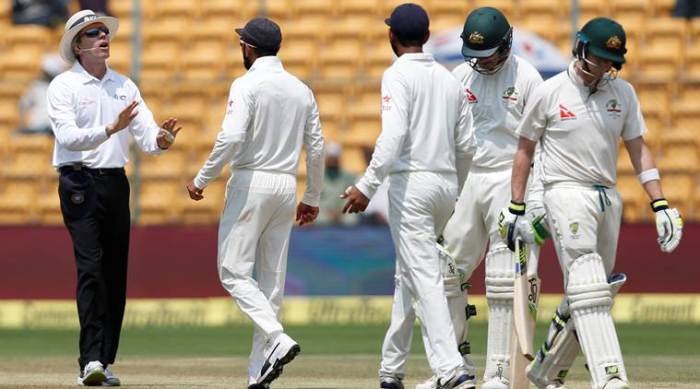
             In the recently concluded TEST Match between India and Australia the biggest controversy was the unethical methods followed by Australian Cricket Team in using DECISION REVIEW SYSTEM(DRS).  As per the ICC rules the batsman who was given out by the Umpire can use DECISION REVIEW SYSTEM(DRS) either by himself or with the consultation and guidance given by the batsman at the other end.

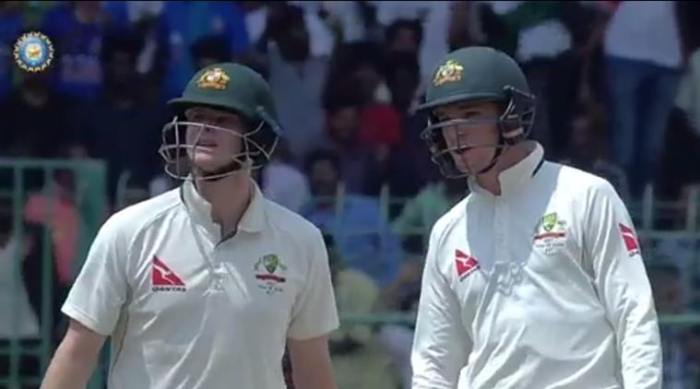
                Australian Batsman were getting inputs from the Dressing Room before they appeal for DRS. Steve Smith the captain of the Australian Team was caught red handed when he was  getting help from his team mates and support staff who were watching the game live on TV in the dressing room.

steve-m

                  BCCI in its official twitter handle targets Steven Smith, calls DRS ‘Dressing Room Review System’

                Cricket is called as the Gentleman game. Ethics are the adequate standards and modes of operation. They aim to provide a level playing field for all so that the sharpness of the brain or the better one wins without advantage.  Gaming needs to be ethical and fair to all.  Ethical Practices in cricket is slowly eroding because of the following

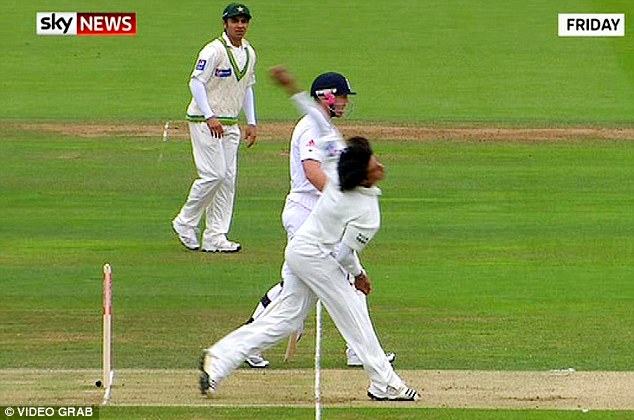
1.Betting scams

article-0-0AF5CCE5000005DC-604_634x420

29_cricket_k

2.Ball Tampering

main-qimg-88658361ee9093b0e769cca0c0f47e11-c

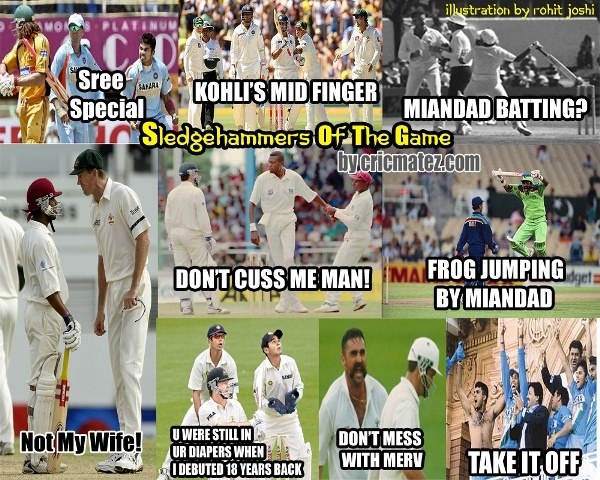
3. Sledging

main-qimg-2e1d45de5969e62cd95a3f0067f81a5b-c

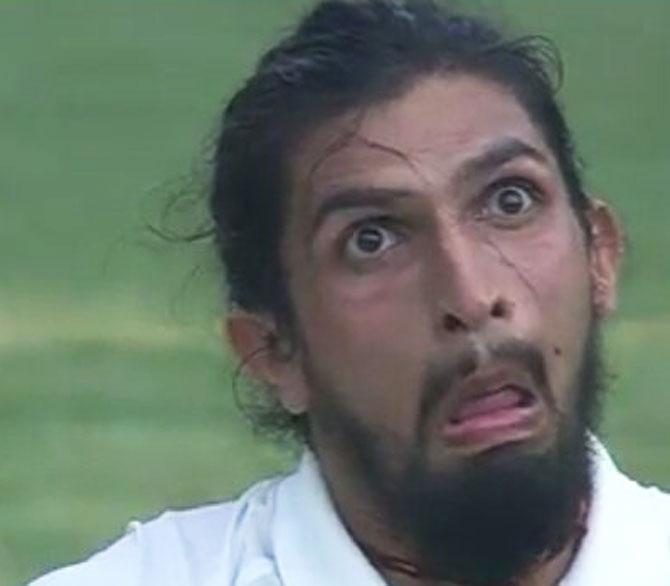
4. Personal Grudge

ishant-mimic1

d35005f9de2e64921384c8b1e6cabffb

To conclude if ethical practices are not followed in any game, the game is going to lose its popularity among people and will slowly diminish.

Ethical practices in cricket a need!!!

FAILURE SUPPLY CHAIN ANALYSIS AND ITS CORRECTIVE ACTIONS

FAILURE SUPPLY CHAIN ANALYSIS AND ITS CORRECTIVE ACTIONS

-Dr.D.Sathishkumar

Assistant Professor

Sankara Institute of Management Science(SIMS)

INTRODUCTION

             Operational superiority in consumer returns management, failure analysis and closed loop curative actions is captivating on an progressively more important position as companies endeavor to get better in their business processes, policies and supply chains to accomplish a outstanding management position in their industry. When redesigning the supply chain designs the premeditated decisions require to be complete concerning supply chain designs that are associated with the hallucination of the endeavor.  High tech companies are looking for prepared development with customer satisfaction and life cycle fabricate distinction gratifying a determined improvement, high apparatus companies are provoked to appear away from their chronological spotlight on advance supply chains for better operational and financial performance. Equipped superiority in customer returns management, failure analysis, and closed loop corrective actions are the innovative focus for companies annoying to achieve competitive improvement and an outstanding guidance situation in supply chain management. In this article it illustrates the failure analysis and the disputes presently faced by high tech companies in management and highlighting the failure analysis supply chains. The method for improving the failure analysis supply chain and the curative proceedings for failure analysis supply chain and creating comprehensive conclusions. The intent of the endeavor is to highlight the failure analysis supply chain challenges faced by high tech companies and distinguish approaches to surmount these in a victorious approach.

SUPPLY CHAIN ANALYSIS FAILURE

      High tech companies will fabricate problematical products to their electronic customers. These products might be shipped to one of the companies to distributors to consumers or to retail supplies where consumers can acquire products. If these products get damage or any manufacturing problem these products are contacted to the manufacturing company and it is send to the company after transaction or liberation this procedure is called reverse logistics.

Some general complaints met by the companies when the customers return their products:

  • The products are not to their expectations or change of product which is not ordered.
  • The Goods are defective or damage at the period of transport when the customer receive the product.
  • Product fails due to some constraints made by users or due to some technical fault in the warranty period.
  • Getting back the products for some manufacturing faults identifies by the competitive company product.
  • Recycle the product with local government regulations by the company

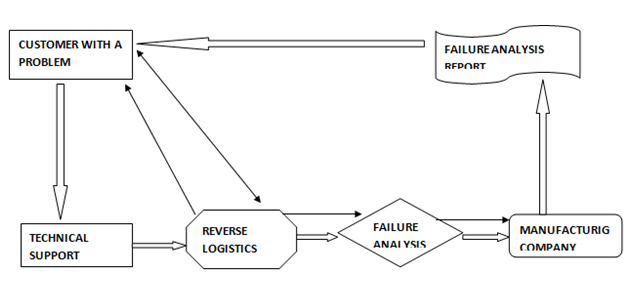
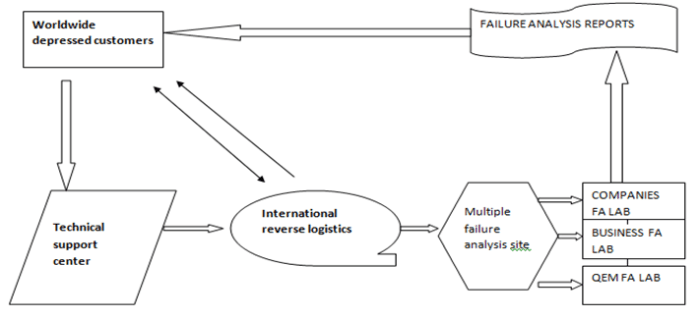
              Products are return due to damage, defects or operational failures, it is important for companies to understand the root cause for this failure. The purpose of diagnosing faults within the returned units and determining root cause is called failure analysis. The complex network of sites, partners, IT applications and processes that supports failure analysis is called the failure analysis system. Failure analysis often involves visual inspection of the returned unit, mechanical and electrical testing of the part and sometimes disassembly to identify and evaluate the cause and severity of the failure. By understanding nature of the product failure, the repair organization can correct the fault with the unit and either return the unit to the customer or hold the unit as a replacement for another warranty situation.

         High tech companies can provide feedback to the development organization to prevent or reduce the effect of such problems in future designs of the product. This feedback can also provide similar problems from arising with other customers. In some cases, contacts with the end customer may require the manufacturer to provide information on the root cause of the problem to ensure that the customers network to electronic instruments that does not disturb the communication system. The process of understanding the root cause of failure, correcting the fault, and feeding information back to the other parts of the organization and customers is often referred to as closed loop corrective action.

                       failuresupply1

Figure 1: Failure analysis system information


The process shown in figure 1 is high level representation of failure analysis system. The main difficulty factors experiential in large international companies comprise:

  • Product family and Numerous products
  • Physically detached clients and downstream supply chain associates
  • Numerous websites and outsourced associates in different physical locations
  • Numerous enervates of failure analysis sites
  • Insufficient gate keeping information for influential authority of proceeds
  • Dissimilar systems to handle information

failuresupply2

Figure 2: Product and Information Flow Failure In global


THE FUTURE FAILURE SUPPLY CHAIN ANALYSIS

            The high tech companies are forced to relocate on prepared effectiveness in the whole supply chain as well as with the functions of reverse supply chain, it is more important and can analyze the solution for new failure analysis supply chain architecture and it helps to solve the problems and can find the ways to identify the values for the function to be achieved. In this article it illustrates the gap between present and future conditions of the supply chain.

 FINDING THE VISION FOR FAILURE SUPPLY CHAIN ANALYSIS

              At the present time companies had known the significance of mission and vision statements to support the human resources and stakeholders approximately the objectives of the company and guarantee that each person focuses the actions on accomplishing the vision. Likewise the company can describe a vision for personality organization and to cross functional business processes like failure analysis supply chains. A vision declaration to facilitate the company’s assurance to higher consumer approval and a optimistic consumer understanding supports the diverse, dissimilar stakeholders with in the failure analysis supply chain approximately a common objective of ensuring that consumer will remain at the forefront of every grouping actions. By bringing mutually a variety of stake holders groupings in important the vision, the company can make sure that every group consents with the vision and is dedicated to implement to accomplish the vision.

CLASSIFYING THE GAP AMONG PRESENT AND FUTURE SUPPLY CHAIN ANALYSIS

                  The gap analysis would engage formative where the developments and approaches from the present condition would need to modify consecutively to meet the needs of the prospect state. Failure analysis supply chains undergo from high costs. Failure analysis stakeholders wish to inferior cost and cut down processes. Thus the gap among present state and future state can be recognized as they transmit to the cost drives of the failure analysis supply chains. Whereas detailed approaches and accomplishment changes to concentrate on there gap are not the main focus of this segment, a high tech company might absolute the procedure. These thoughts would be utilized to expand execute plans to re design meticulous aspects of the failure analysis supply chain.

PREVIOUS APPROACH OF FAILURE SUPPLY CHAIN ANALYSIS

        Regular endeavor architecture has been considered by several intellectuals in the management and societal discipline fields for a numeral of existence. Conversely the majority of this exertion has been accepted out with a extraordinary focus on IT system procedure views, and architect organizations. Companies to assist include try to designer or revamp their systems and organizations, tended to regard as the process, organization structure, background, information technology in separation, and make improvements to everyone individually.

An advanced level loom to architect the failure analysis supply chain absorbs:

  • Identifying and understanding the failure of supply chain analysis in the present
  • Categorize the vision for the opportunity to get failure in supply chain analysis
  • Considering the problems in the present classification and the gaps among the present and preferred state
  • Finding probable clarifications or advances to final the gaps
  • Selecting between option move towards and suggests an loom


 A FRAMEWORK FOR REVERSE SUPPLY CHAIN 


failuresupply3.png

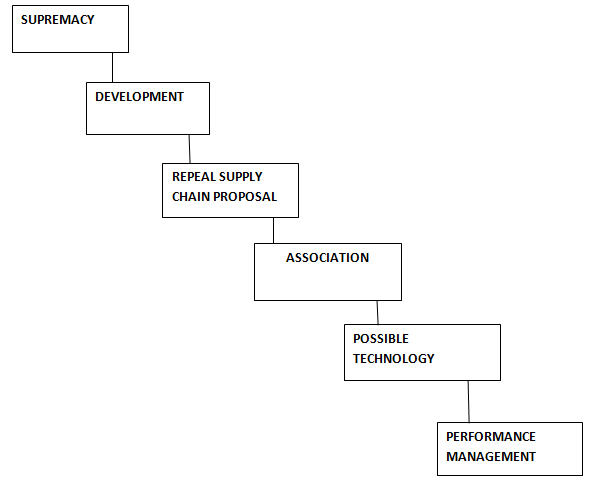
Figure3: Reverse supply chain architecture

SUPREMACY

            The supremacy view believes the endeavor business model, business plan, interior and exterior strategies that impact the endeavor, arrangement among policies, plan and organization, management of the production, incessant development and propose principles relates within the industry.

DEVELOPMENT

        The development view considers input processes and behavior within the reverse supply chain. It comprises that the process are directly concerned in the gate keeping of the products and belongings, attainment of the products back from consumers, reverse logistics operations, temperament of the products returned to the company and recuperation of value from the products. It is also includes management of the uninterrupted process and consumer experience and processes for monitoring the functions.

REPEAL SUPPLY CHAIN PROPOSAL

     The repeal supply chain proposal design view considers the endeavor from the perception of scheming the supply chain arrangement. This comprise network design of the supply chain, optimization of the supply chain, reverse logistics design, record management, financing behavior and outsourcing connected decision making. This distinguish the function of network has foremost insinuations for its cost configuration benefit expenditure discharge lead period, faithfulness, receptivity, limberness, consumer services and its companies financial appearance and dissimilar system structures have dissimilar strengths and weakness.

ASSOCIATION

              Association is used to recognize the possession and arrangement of the association within the endeavor, configuration across the association and enlightening fundamentals involved with management a cross functional association.

POSSIBLE TECHNOLOGY

            Possible technology includes the hardware, software, infrastructure and information management systems that sustain the endeavor. In the circumstance of the reverse supply chain, this probable expertise observation considers procedure computerization, visibility, knowledge systems.

PERFORMANCE MANAGEMENT

        Performance management considers the organization and bench marking processes and organizations necessary to direct the business. It moreover includes the key performance pointers that are significant to calculate contained by the reverse supply chain endeavor. It allows the endeavor to calculate the achievement of some new or redesigned procedure.

CHOOSING THE BEST SUPPLY CHAIN DESIGN BY USING ASSESSMENT MODEL

In all the associations pronouncements are made on a repeated foundation at all levels:

  1. Premeditated
  2. Equipped
  • Planned

Pronouncements are made through concerning the direction of the firm, the suppliers to form relations with, which consumers order to accomplish, etc. Whereas several conclusions are pinnacle downward more and more conclusions are completed at inferior levels in the organization. The direction approach within association often decides where in the disagreement, in which numerous decisions makers converse the pros and cons of the resolution or agreement in which every associate of the conclusion making grouping agrees to execute the decisions. Resolutions making might happen using together debate and consensus. Many high tech firms frequently use debate to recognize the pros and cons of the problems concerned in the resolution, agreement is not constantly emphasized. Moderately the conclusion of the resolution plays an ever more significant role. Dedication from members in a cross functional conclusion making players is significantly important in firms that require different organizations or functions to organize with each other and make sure that the suggested action will be implemented, particularly by those who may have unpopular accomplishment. The shares appreciate of foundation will help through implementation, by building momentum to conquer any obstructions that may occur.

FAILURE SUPPLY CHAIN ANALYSIS DECISION MODEL

          A failure supply chain analysis decision that absorbs numerous stakeholders groups for input, conversation and accomplishment are not much different. Such resolutions should engage deliberate by the groups that are impacted or will require contributing in the new endeavor planning, and necessary agreement to make sure achievement of the accomplishment of the arrangement and procedure. Decisions completed inside the organizations might be based on intensely embedded assumptions about consumers, organizations, procedure and approaches to convinced behavior generous rise to conservative perception that could be trailed by the firm or complete industries.

Missile women of India

Missile women of India

Dr. Priya Kalyanasundaram | Head of Department

Sankara Institute of Management Science(SIMS)

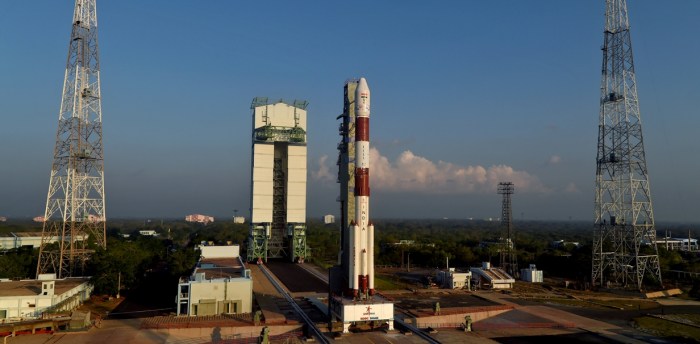
Traditionally, an Indian woman had four fold status-role sequences. These were her role as a daughter, wife, housewife (homemaker), and mother.The woman, whose status and role traditionally was well defined and almost fixed in the society, is now experiencing far-reaching changes. The women of the present generation have generally received higher education than the women of their preceding generation. There have been far reaching consequences in the economic status of their families. In this present era Indian women broke the stereotypes; India’s self-made women often remind us that any stream of study is not dependent on the gender.The contribution of women scientists was always at a high level. None can question the power of women when it comes to ISRO. So, here are 8 of the best female ISRO scientists who will make you even more proud of our country.

c37-slider

1. MinalSampath.

She played a major role in the Mars mission of India. For two years, she worked in a windowless room for 18 hours straight as a systems engineer. The efforts surely reflected in the outcome of the mission.

2. Anuradha TK.

She got her inspiration to be a space scientist after seeing Neil Armstrong walking on the moon. She is now the senior most female officer in ISRO. This is a sheer example of never letting go of your passion and achieving them at any cost.

3. RituKaridhal.

Ritu is the perfect example of keeping balance between personal life and professional life. She is a mother of two children. During her childhood, she spent most of her time on the terrace usually studying about stars and outer space. And finally her dream came true when she became the Deputy Operations Director of the Mars orbiter mission.

4. MoumitaDatta

Moumita also got her inspiration from the ISRO’s mission of Chandrayaan-1. Now she is one of the top scientists of ISRO. She is also leading a team to make indigenous progress in optical sciences as a part of Make In India initiative.

  1. NandiniHarinath.

She is a fan of the Star Trekk series. Well who isn’t, right? But, she is one of those people who did what they were a fan of. The Mars orbiter mission was her first project in ISRO on which she worked hard for 20 years.

6. KritiFaujdar.

Kriti does not look much like a science geek, but she is more than she looks. She loves working at ISRO and finds it as one of the safest places for women to work. She is a part of the team which monitors satellites and space missions continuously.

7. N Valarmathi.

This lady is one of the most respected women in our country. She is the first person to be awarded with Abdul Kalam Award for her work as project director of RISAT-1. She is the second woman to head a prestigious project after Anuradha TK.

8. Dr.Tessy Thomas.

Even though she does not work for the ISRO, it is of great deed to talk about her too. She led the project of Agni-1V as project director and became the first woman to lead a project at DRDO.

 India salutes the 8 women scientist who has madegreatest accomplishments by launching 104 satellites in one go and has made India proud.


BRAIN DRAIN TO BRAIN GAIN

BRAIN DRAIN TO BRAIN GAIN

K.P. Radhika

Assistant Professor – SIMS

The recent buzz and alarm on the global arena was about the Protectionist policy decisions by President Trump, specifically on the employment grounds. The new bills and policies on visas have turned the policy makers’ attention of all nations to restore balance both on the employment and bilateral relationship with US. India is one among the top trade and employment partners of US, strongly hit by the recent government’s policy decisions on the H-1B visa. The understanding of the issue is enhanced in this blog with the current scenario and the challenges posed.

The Scenario

The Indian bilateral trade and employment relation with the United States of America in the past three decades was strengthened with the Business Outsourcing Industry that has matured to reach heights of almost $150 billion. This industry has attracted the highest Indians due to its great potential on the employment front. Of the total Indians currently working in the US, majority are associated with the IT and ITES industry followed by health care professionals and few related to the pharma and other industries.

The Indian population working in the US predominantly holds the H-1B visa (H-1B is a non-immigrant visa that allows American companies to temporarily employ foreign workers in specialty occupations). Statistical reports reveals that of the 4.5 million Indians in the US, 65 percent holds the H1B Visa, 10 percent have become citizens and the balance are Green Card holders and other visa holders.

The protectionist policy and the challenges

Sarabjit K Nangra, vice-president, research, IT, Angel Broking, says, “If protectionist policies continue beyond rhetoric and specific curbs are erected, there could be a 30-40% hit on net profit.” For example, a hike in the H-1B minimum wage to $130,000 could add $3.5-4 billion to the tech industry’s wage bill (that’s additional costs calculated for 55,900 H-1B applicants sponsored last year), shaving off a significant part of its annual operating profit.

  • The recent bills introduced by President Trump in the US Congress seek to make the outsourcing industry tougher and expensive for both India and the US. The earlier pay associated with H-1B visa per employee was $ 60000 per annum since 1989, which has been hiked to 137000 $ to be paid annually to get H1B visa. This makes it unviable for the Indian IT companies to send employees in the future.
  • The US based companies will also face increase in cost of hiring employees and therefore will be forced to start sourcing local people that poses threat to the end user for want of experienced and quality service.
  • With regard to the Indian IT companies, majority of the projects have their clients sourced from the United States. The series of curbs posed by the bills of President Trump will make the projects of Indian IT giants like TCS and Infosys unviable, due to the increasing cost and will in the future pose threat to the survival of these Indian IT companies.
  • “For tier II companies, the short-term blow could be harder as they don’t have much onsite resources and bank on labour arbitrage to sell services. There could be a backlash in the next 18-24 months as companies will have to tap into globally available skills.” Industry body NASSCOM reckons a demand-supply gap of as high as 80 million over the next decade for digital skills, with the new policy.

With the above challenges the probability of return of employees to India has been forecasted to be on the higher end in the near future. This scenario has been recognized as “Brain Gain from Brain Drain” and brain gain brings with it greater challenges for the employees returning to India. The major challenges foreseen are:

  • The Indian government has to make necessary arrangements to employ these resources in the optimum way.
  • The Indians returning will face challenge of getting jobs in India to meet their quality and expectations.
  • The adaptability to Indian corporate work culture by these employees will also be a matter of concern, specifically with people in the middle managerial experience.

Brain Gain to India – the predicted outcome of Trump’s protectionist policy will bring about serious disequilibrium to Indian economy, which might have its impact on the various sectors and government policy actions. The question is how far is India getting ready to face the challenge and what are the remedial measures built to bring back the equilibrium of the economy?

COMMITTEE ON CYBER SECURITY BY RBI

COMMITTEE ON CYBER SECURITY BY RBI

 Dr. D. Nithya | Assistant Professor

Sankara Institute of Management Science(SIMS)

The Reserve Bank of India (RBI) has decided to set up a cyber security, an inter-disciplinary Standing Committee to inspect various threats on cyber attacks and suggest measures to overcome them. RBI stated in its sixth bi-monthly policy statement for 2016-17 announced. It will be cross functions and involve industry as well as government members. The standing committee will put forward suitable policy measures to strengthen cyber security and flexibility in the cyber security system. The main role of the committee being, Review of the threats in the existing system or prevailing technology on a continuing basis, setting up of various security standards and protocols, checking interface with the stakeholders and also suggest appropriate policy measures to strengthen cyber security and flexibility background. The committee for the above has been set up based on the recommendations from the panel of expert on the information technology and cyber security. Recently the banks took lot of efforts to fight against cyber attacks but the diverse nature of the attacks made RBI to go for a one time solution of forming a standing committee on cyber security. In the Cyber attacks last year, as many as 32.14 lakh debit cards were compromised. It was the highest ever violation of debit card data in India. Of the debit cards affected, about 26.5 lakh were Visa and Master Card enabled and 6 lakh were RuPay enabled.

Several public and private sector banks blocked over 32 lakh debit cards to safeguard customers from any financial fraud. To overcome this issue, RBI had issued strict guidelines to banks, asking them to be prepared to meet the cyber risks. The major criticism against the Indian banking system is that banks remain silence on the cyber attacks in their system. Hope this committee formed will be a breakthrough for all the criticisms made on the Indian Banking System

.

Highlights of Union Budget 2017 – Education sector

A detailed analysis on education sector 2017

– Dr.S.Sundararajan, Associate Professor, Sankara Institute of Management Science(SIMS)

  • Government will focus on the true potential of the youth
  • Job-creating packages for textile sector
  • Good quality institutions which will possess better quality and education
  • Access to SWAYAM education portal online, which will be introduced with 350 online courses
  • 100 India International centres will be launched across the country for the youth to seek jobs outside India
  • Sankalp, a market relating trading website will be launched
  • Quality and market relevance will be noted in vocational training
  • Special scheme for employment has been launched in the textile sector
  • National Testing Agency will be conducting major entrance examinations
  • CBSE will be freed from conducting examinations, and will focus majorly on academics
  • Skill strengthening to be implemented from this year with a budget of Rs 2,200 crore
  • Greater autonomy will be provided to major institutes
  • Finance Minister announced the restructuring of University Grants Commission
  • Two new AIIMS to be opened in Jharkhand and Gujarat
  • Big employment opportunities to come up in tourism sector


RECOGNITION AND SELF CONCEPT

RECOGNITION AND SELF CONCEPT

Dr. S. Gowri

Senior Professor, Sankara Institute of Management Science(SIMS)

Self Concept: 

Self-concept is the image that we have of ourselves. Psychologists define self-concept as individual’s perception of their behavior, abilities, and unique characteristics.

Self-concept is essentially a mental picture of who you are as a person. For example, beliefs such as “I am a good friend” or “I am a kind person” are part of an overall self-concept.  Self-concept tends to be more malleable when people are younger and still going through the process of self-discovery and identity formation. As people age, self-perceptions become much more detailed and organized as people form a better idea of who they are and what is important to them.

How exactly does this self-image form and change over time? This image develops in a number of ways but is particularly influenced by our interactions with important people in our lives.

Authors Crisp and Turner says “The individual self consists of attributes and personality traits that differentiate us from other individuals (for example, ‘introverted’)

Components of Self-Concept

Like many topics within psychology, a number of theorists have proposed different ways of thinking about self-concept.

According to a theory known as social identity theory, self-concept is composed of two key parts: personal identity and social identity. Our personal identity includes such things as personality traits and other characteristics that make each person unique. Social identity includes the groups we belong to including our community, religion, college, and other groups.

Bracken (1992) suggested that there are six specific domains related to self-concept:

  • Social – the ability to interact with others
  • Competence – ability to meet basic needs
  • Affect – awareness of emotional states
  • Physical – feelings about looks, health, physical condition, and overall appearance
  • Academic – success or failure in school
  • Family – how well one functions within the family unit

Humanist psychologist, Carl Rogers believed that there were three different parts of self-concept:

  1. Self-image or how you see yourself. It is important to realize that self-image does not necessarily coincide with reality. People might have an inflated self-image and believe that they are better at things than they really are. Conversely, people are also prone to having negative self-images and perceive or exaggerate flaws or weaknesses.

    For example, a teenage boy might believe that he is clumsy and socially awkward when he is really quite charming and likable. A teenage girl might believe that she is overweight when she is really quite thin.   Each individual’s self-image is probably a mix of different aspects including your physical characteristics, personality traits, and social roles.

  2. Self-esteem, or how much you value yourself. A number of factors can impact self-esteem, including how we compare ourselves to others and how others respond to us. When people respond positively to our behavior, we are more likely to develop positive self-esteem. When we compare ourselves to others and find ourselves lacking, it can have a negative impact on our self-esteem.
  3. Ideal self, or how you wish you could be. In many cases, the way we see ourselves and how we would like to see ourselves do not quite match up.

Congruence and Incongruence

As mentioned earlier, our self-concepts are not always perfectly aligned with reality. Some students might believe that they are great at academics, but their school transcripts might tell a different story.

According to Carl Rogers, the degree to which a person’s self-concept matches up to reality is known as congruence and incongruence.

Rogers believed that incongruence has its earliest roots in childhood. When parents place conditions on their affection for their children (only expressing love if children “earn it” through certain behaviors and living up to the parents’ expectations), children begin to distort the memories of experiences that leave them feeling unworthy of their parents’ love.

Unconditional love, on the other hand, helps to foster congruence. Children who experience such love feel no need to continually distort their memories in order to believe that other people will love and accept them as they are.

Linking Self Concept and Recognition:

There is a strong connection between self concept and recognition for one self. Recognition as such is the acceptance of one by others; let it be peers, friends or other social environment. What happens to us when others don’t accept us and we are not being recognized by others?

As we all know that we are the social animal, we basically want to live with others. In the process we adjust with others, share thought, feeling and emotions with others. By then we feel emotionally stable and feel secured. At times some people are detached from this common phenomenon. This condition may be resultant of many factors such as deprivation of parental care at the childhood or loss of parents, negative inputs from parents, teachers and friends about self. (Incongruence- where the self concept does not match with reality)

What happens if this condition continues in adulthood?

This kind of people might take either fight or flight decision as they feel depressed and inadequate thinking that the whole world is bad for him but looks good for others.

The person might get agitated about the whole environment and might take the decision to take revenge in extraordinary circumstances.

To solve the issue;

These people try to seek the attention from others by hook or crook. In Most cases they  are the one who does some socially unaccepted activities or indulging in disruptive activities in the class room. This results in suspension or some punishment by which they are fulfilling their identity or recognition hunger.

Usually they are either overactive or silent in social set up. By interacting with these people and giving some responsibility based on their caliber, we can easily solve the problem.

If they know themselves that they belong to this category, they can voluntarily interact and seek opinion about their activities. This will put them in comfort when someone appreciates or comments about it. In extreme cases they can approach a psychologist or a counselor for mentoring.

Marketing Myopia

Marketing Myopia

– K.Thirugnana Sambanthan , Asst.Professor, SIMS

A short-sighted and inward looking approach to marketing that focuses on the needs of the company instead of defining the company and its products in terms of the customers’ needs and wants. It results in the failure to see and adjust to the rapid changes in their markets.

The concept of marketing myopia was discussed in an article (titled “Marketing Myopia,” in July-August 1960 issue of the Harvard Business Review) by Harvard Business School emeritus professor of marketing, Theodore C. Levitt (1925-2006), who suggests that companies get trapped in this situation because they omit to ask the vital question, “What business are we in?”

Businesses deceive themselves in four ways:
• The belief that growth is assured by an expanding and more affluent population
• The belief that there is no competitive substitute for the industry’s major product
• Too much faith in mass production and in the advantages of rapidly declining unit costs as output rises
• Preoccupation with a product that lends itself to carefully controlled scientific experimentation, improvement and manufacturing cost reduction

marketing-myopia

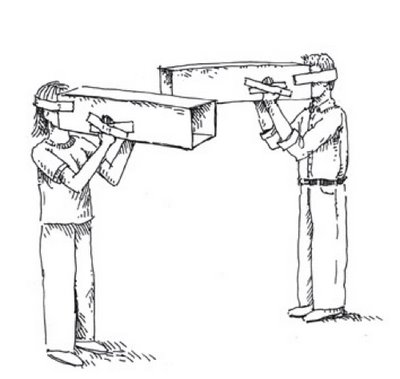
The “New marketing myopia” occurs when marketers fail to see the broader societal context of business decision making, sometimes with disastrous results for their organization and society.  “New marketing myopia” phenomenon state that it is essential to recognize that other stakeholders also require marketing attention..

tunnel-vision

In the present scenario many companies are focusing on short term goals rather than long term goals.  They fail to cater the needs of their customers as well their stakeholders. Organizations which feel happy with their short term success and does not think about their future will  slowly lose their presence in market.


APPLICATION OF RFID TECHNOLOGY ON COLLEGE STUDENTS ATTENDANCE AND LIBRARY SECURITY SYSTEM

APPLICATION OF RFID TECHNOLOGY ON COLLEGE STUDENTS ATTENDANCE AND LIBRARY SECURITY SYSTEM

Dr.D.Sathish Kumar

Asst.Professor, SIMS

RFID is known as Radio-Frequency IDentification. The RFID refers to small electronic devices that consist of a small chip and an antenna. Normally the chip carries 2000 bytes of data or less. The RFID device scans the bar code or a magnetic strip on the back of any card to get the information, the RFID device must be scanned to retrieve the identifying information. In this article explains the application of RFID technology in college student attendance system and library security system. To improve the education level of the institution RFID system implementation plays a important role in the work of management of college students learning efficiency, also improving grade of the student and making the college assets like library system to keep secure. Therefore, colleges need an information system platform of check attendance management and library security information’s using the information technology which gathers the basic information of student automatically. Library consists of journals, books, reports, thesis etc. For security purpose, the goal of the security system should be to provide a safe and secure facility for library resources and equipment.

STRUCTURE OF RFID SYSTEM

Development of Science and Technology there is multiplicity of student’s attendance systems. Though the products and technology of the subsist attendance systems have been comparatively grown-up, but more often than not used in housing, office buildings etc. Particularly, these attendance system are frequently used contactless classification or biometric technology, it is hard to meet the distinctiveness about large number of persons and the burly liquidity. To solve the problem, combine with the unambiguous situation of the college or university classroom, the attendance system swelling of student classroom based on RFID has been intended.

img_20170116_044746

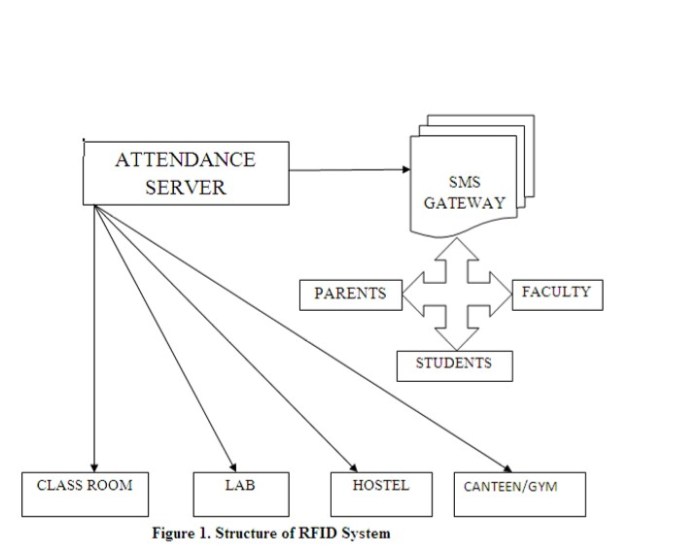
From the Figure.1 Structure of RFID system it shows the attendance server is connected with Class Room, Lab, and Hostel also in Canteen/Gym. The presence of the students will be recorded in the attendance server. The absence of the student details will be stored and the information is passed to students, parents and faculty through SMS.

TYPES AND SELECTION OF RFID TAGS


RFID tags can be divided in to different types.

• Read-Write tag

• Active and Passive tag

• Initiative tag

• Low, High or Ultra Frequency tag


Read-Write tag data read and write type, tag can be divided into read-only tag and read-write tag. Similarly for Active and Passive tag, the power supply, tag can be divided into active tag and passive tag. For Initiative tag is like modulation schemes, tag can be divided into initiative tag and passive tag. Low, High or Ultra Frequency tag, the work frequency, tag can be divided into low frequency, high frequency, ultrahigh frequency. Low frequency tag’s work frequency range is 30 to 300 KHz, classical frequency is 125KHz and 133KHz, the readable distance is 10cm. High frequency tag’s work frequency range is 3 to 30MHz, classical frequency is 13.56MHz, the readable distance is 1m.Ultrahigh frequency tag’s work frequency is 300Mhz to 3Ghz, the classical frequency is 433Mhz, 902 to 928 MHz, 2.45 GHz and 5.8GHz. To determine the type of RFID tag, the width of the doors of the class rooms.


RFID LIBRARY SECURITY SYSTEM

APPLICATION OF RFID TECHNOLOGY ON COLLEGE STUDENTS ATTENDANCE AND LIBRARY SECURITY SYSTEMu

RFID in library security system will reduce the time of library staffs by making the system to make automatic their errands. RFID library management helps to an establishment that uses by saving the book readers time by searching, borrowing or returning a book. Taking care of books and making them accessible to the book readers are significant errands. Library staffs spend time mainly in recording information of inward and extrovert books. Borrowing and returning of books can be recorded automatically with the help of self check-in and check-out systems. This system engages installation of particular software. An individual using this software to borrow books is obtainable with options on a computer monitor. The individual has to recognize himself with a code, which is preferably a individual identification number, or an unique identity code. Books selected by the individual are recognized by the systems integral RFID reader, and the observation fragment in the books tag is disabling by the system. When a book is returned, the check-in and check-out system triggers the observation fragment.

img_20170116_044713


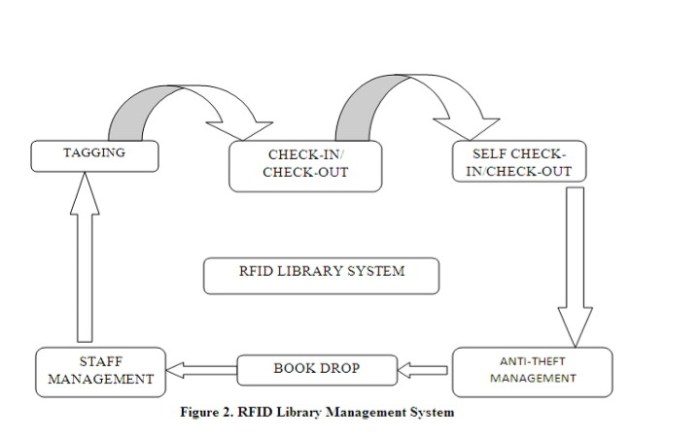
Figure 2 shows the RFID library management system operation, the operations are

Tagging: The most significant link in any RFID system is Tagging. It has the capability to accumulate information involving to the exact item to which they are attached, redraft over without any constraint for contact or line of sight. Data within a tag may afford classification for an item, evidence of possession, unique storage place, status and history. RFID tags have been purposely premeditated to be attached into library media, include books, CD’s and DVD’s ‘.


Self Check-in/Check-Out Station: The system is developed with a special software connected with a touch screen computer with built in RFID reader to identify the personal data, book and other library services. After identification of the library ID card like bar code or personal identification number the software in the system will instruct to choose for the next option like check-in or check-out of several books. By selecting the options the books availability is recorded automatically.


Anti-theft Management: RFID is the anti-theft part of the Library RFID Management System using the same RFID tags entrenched in the library items. Each path is able to follow substance of about 2 meter and would activate the alarm system when an un-borrowed item passed through them. The alarm will sound and lights on the gate will flash as patron passes through with the un-borrowed library material.


Book Drops: The RFID book drop is usually located outside of the library premises. It allows books, CDs and other library materials to be returned safely and securely any time and even before or after library working hours. The RFID book drop creates another easy return option for library patrons as library materials can be returned 24 hours a day any time convenient to the patrons. The use of RFID book drop will increase customer service because library staff will have more time to assist library patrons. Overall, queuing and waiting time for book return will be reduced significantly.


Staff management: It is a staff assisted services such as return, tagging, categorization and etc. It is encumbered with arming/disarming component, tagging component and categorization component. Arming/Disarming component allows Electronic Article Surveillance fragment inside the tag of the library objects to be set/reset so as to trigger/not trigger the alarm of the Electronic Article Surveillance gate.