Expectations Comes True – Pygmalion Effect on the Performance of Employees

Expectations Comes True – Pygmalion Effect on the Performance of Employees

  • Dr.Priya, Professor, SIMS


Pygmalion effect or self-fulfilling prophecy occurs when a false definition of the situation evokes a new behavior that makes the original false conception come true. If people define situations as real, they are real in their consequences. This explains how others expects about us and how it affects our self -concept and influence our behavior. The verbal and non- verbal messages and strokes which we receive from significant people in our lives (significant others) influence our self-concept and determine our behavior. This concept can be used as the management tool for increasing the confidence and motivation of employees and thereby enhances the employee productivity.


Pygmalion Effect

The term Self-Fulfilling Prophecy, or SFP as it is popularly known (Merton, 1948) suggests that whatever one holds in one’s mind (even subconsciously) tends to occur in one’s life. It explains belief or an expectation will affect the way a person will behave in a way that confirms the belief or expectations. An expectation when created is communicated to another person, from whom the desired behavior is expected. Then the person is treated according to the expectation and finally the expectation comes true. Self- fulfilling prophecy is a circular feedback between expectation’s, actions and results.

THE ABC’S OF PYGMALION

  1. A) We cannot behave or act in a manner that is inconsistent with our expectations and beliefs.
  2. B) Our behaviors and actions toward others influence their expectations, behaviors, and performance either positively or negatively.
  3. C) Thus, our expectations will become a self-fulfilling prophecy, partly because we will act in a manner that is consistent with that “prophecy” and causes it to “be fulfilled.”

HISTORY OF PYGMALION

The word Pygmalion comes from the sculptor Pygmalion, who fell in love with the statue of the ideal woman he created; the statue was finally brought to life with the help of Goddess Venus. The modern update comes from George Bernard Shaw’s play Pygmalion, which shows that the difference between a lady and a flower girl is not in how she behaves, but in how she is treated. Pygmalion effect or self-fulfilling prophecy occurs when a false definition of the situation evokes a new behavior that makes the original false conception come true. If people define situations as real, they are also real in their consequences.

What managers expect of their subordinates and the way they treat them largely determines subordinate performance and career progress. A manager having low expectations from subordinates may exhibit behaviors like seating the person in low-prestige areas, paying less attention, smiling less often, and giving less information about what is going on. Special projects may rarely be given as may be the opportunities given for presentations or expression of opinion.

PYGMALION EFFECT AS A MANAGEMENT CONCEPT:

Pygmalion Effect is taught as a management concept in B-schools today and it can be even well practiced in organizations.  Since Pygmalion effect yield we get what we expect, it logically follows that high expectation lead to high performance; and low expectation lead to low performance. The assumptions that managers make about their employees will affect their expectations and treatment towards the employee. The reasons why ineffective managers set low expectations of their employees are:

  • Theory x- Managers who believe that people have low motivation and ambition expect very little.
  • Managers who want to be liked by their employees, fear creating resentment against themselves by setting demanding goals.
  • Managers who fear they may not able to achieve high goals.
  • Managers who believe their employees are already overloaded and overworked.

Effective leaders and managers set ‘stretch goals’, which may seem unrealistic and demanding. These mangers and leaders have great confidence in themselves and their people. Mangers often predict the performance of their staff with precision and accuracy. Employees can tell exactly how their co-workers bosses and customers will act in certain situations.

PYGMALION EFFECT AT WORK

A performance review can be a good example of how Pygmalion Effect works. Performance reviews do not just tell us about the past performance, they also determine the future performance. A good performance review makes the employee perform well and feel positive and confident. Even a non- verbal gesture can convey the message of appreciation and acceptance. Thus it’s not just what one’s says, it’s also the way one behaves.

The implication of the Pygmalion Effect for leaders and managers is massive, it means that the performance of the team depends less on them than it does on the manager. The performance one gets from people is no more less than what one expects; which means one must always expect the best.Thus managers play an important role in the success or failure of the employees through praise, feedback, etc.  It can also be concluded that positive expectations play a vital role in establishing an organization-wide Pygmalion Effect.


USE A “POSITIVE PYGMALION” APPROACH

  • With employees demonstrating low confidence or poor performance.
  • To ensure the success of new hires (use it to raise their expectations of the organization and current employees’ expectations of the new hires).
  • To clear the record of former “problem” employees (so that their past reputation doesn’t perpetuate negative SFPs) when conducting any type of training.
  • To prevent real or potentially low achievers from being victims of the negative SFPs of others.
  • To set a positive tone when new management or leadership takes over.
  • When describing employees and teams (come up with positive, inspiring labels that let them and others know how much you believe in them).
  • When setting individual, departmental, or organizational goals— the more challenging the better.


Tax Evasion:

Tax Evasion

– Kalyanaraman TR, JOINT SECRETARY
Sankara Institute of Management Science

tax-evasion


Today, on this blog, I will be discussing few reasons why majority of earning citizens of India indulge in tax evasion and whether these reasons are justifiable.

First and foremost, the obvious reason is to accumulate more wealth by avoiding paying the required tax amount to the government. This unaccountable fund becomes black money and majority of this source of funds are deposited in overseas banks, it is also used to purchase wealth, and also the money is safely secured and is stagnated for years, and is used when the need arises. This motive of tax evasion for wealth accumulation, I am assuming are majorly done by the citizens who have yearly income of more than 10 lakhs.  Also as per one of the media source, only 24 lakh citizens of India have declared that their earnings are more than 10 lakhs per annum, this number is staggering.

Secondly, many are of the view that, the Government doesn’t provide any basic facilities with good standards to the public, and hence, they feel that they have no reason to pay the tax, as their tax money is misused for corruption.  They feel, most cities in India, Government hospitals do not have the same high end facilities as private ones. Also similarly, government schools are only considered for people under poverty line. Also few argue that Government even fails to provide basic security in their neighbourhood, and hence, they hire their own security guard to safeguard their homes. Moreover, it is argued that, in most developed countries, Government hospitals, schools, have better infrastructure and facilities than private ones, and everyone gets basic medical insurance for free. Also an adult unemployed citizen in most developing countries gets monthly grant until they find an employment. These are the reasons why in developed countries, tax evasion is less compared to developing countries that provide substandard facilities.

On the contrary, many  believe that it is duty of every earning citizen to pay the required tax,  as every citizen is still using some basic government services or facilities,  irrespective of whether the government  is providing the service  at international standards or not. Also many freebies and subsidies are provided by the government including the ration facility, with the help of the tax money. Hence, I also agree to this view and sincerely hope that within few years,  government will start providing facilities that are even better than the private sectors at free or nominal cost, until then let’s keep doing our basic duty as a citizen of this great country.

FINANCIAL INNOVATIONS AND FINANCIAL INCLUSION – THE LINKAGE

FINANCIAL INNOVATIONS AND FINANCIAL INCLUSION – THE LINKAGE

K.P. Radhika

Assistant Professor – SIMS


Financial Inclusion and Financial Innovations are the two buzzwords that Indian economy is witnessing as a result of the radical measures taken by our Honourable Prime Minister to restructure the growth path and curb corruption. Financial innovation and inclusion are widely recognised tools to be adopted and accepted for enhancing the financial system of the country across the globe in a sustainable manner.

Financial Inclusion – the roadmap for policy reforms

The World Bank noted that “financial inclusion” is the key enabler for reducing poverty and boosting prosperity and has called for Universal Financial Access (UFA) by 2020. Financial inclusion means that individuals and businesses have access to useful and affordable financial products and services that meet their needs – transactions, payments, savings, credit and insurance – delivered in a responsible and sustainable way.(Source: World Bank Report)

The concept of financial inclusion is the use of formal and regularised methods of banking for transactions to promote the various financial products associated with it. This system of operation of financial transactions through banks and other financial institutions ensures increase in the quality of life of households. Households become more responsible and accountable towards their savings, business transactions, risk management, investments and planning of optimum utilisation of resources available.

According to World Bank’s Global Financial Inclusion Survey (2012), only 35% of adults in India had access to a formal bank account and only 8% borrowed from institutional and formal sources. (b) As per Census 2011, only 58.7% of households are availing banking services in the country. The current scenario of India has posed severe challenges to the government on issues of various policy regulations and implications. Research indicated that countries that have well defined financial inclusion strategies have increased the pace and impact of reforms and development. The challenges that India is currently posed with the achieving of 100 percent financial inclusion are:

  • Gender based disparity in financial inclusion
  • Rural – urban divide in adoption and accessibility of financial resources
  • The MSME sector with inadequate reach to formal financial sector for sourcing and operations.
  • Appropriate measures and regulations to ensure responsible provision of financial services.

These challenges liquidate the operational efficiency of major policy reforms aimed towards promoting growth and development of the country. For example, the MGNREGA, Micro Finance programmes were targeted towards eradicating poverty and unemployment, but with the large unbanked population of the country, these initiatives have not yielded the desired results owing to informal methods of transactions and no regulatory checks for the same.

Financial Innovations – an aid for financial inclusion

Financial innovations have emerged as a great catalyst to the financial system of the country. Financial innovations lower cost of capital, reduce financial risks, improve financial intermediation, and hence welfare enhancing. Thus financial innovations can be seen as the central force driving the financial system toward greater economic efficiency. Countries where financial institutions spend more on financial innovation are better able to translate growth opportunities into GDP per capita.

In India the financial sector reforms since the early 1990s have triggered the growth of the financial innovations in the banking sector, with the various measures by the RBI. The banks have moved from the traditional ‘brick and mortar’ model to a ‘product-centric’ model by exploring, developing and promoting their innovative products that have been stimulated by the technological shocks. These financial innovations have brought many improvements in the financial environment of the country and have become a necessary part of the financial market to meet the needs of present global financial system and environment.

The challenges that India faces in the achievement of 100 percent penetration of financial innovations are

  • Technological challenges of upgradation of systems across banking sector.
  • Regulatory measures and protection from misuse and exploitation.
  • Rural urban divide in provision of innovations.
  • Creating awareness on the innovative product.

The Linkage

The individual aspects of financial inclusion and innovations thus create a natural coherence and congruence between innovation and inclusion on the financial arena. Policy makers should therefore take into account the linkage and integrate on the working platforms to make innovations work in line with inclusive policies thereby ensuring growth of the economy. The immense potential of the financial innovations should not be overlooked by the financial agents and every effort should be made to make innovations as the aid to foster financial inclusion and inclusive growth of India.


“Mobile Wallets in India” – Need of an Hour!

mobile-wallets


“Mobile Wallets in India” – Need of an Hour!

-D. Nithya , Assistant Professor, Sankara Institute of Management Science(SIMS)

THE GOVERNMENT’S step to discontinue notes of 500 and 1000 denominations might have hit small businesses and vendors but Prime Ministers’ demonetisation scheme is a hit among fintech and mobile wallet services like Paytm, Ola Money and MobiKwik. With the focus on going cashless, consumers, unable to withdraw money due to closure of ATMs, have swarmed to mobile wallet services.

Mobile wallet is a very young concept in India that has taken on consumer psyche rapidly. Everyone is loving mobile wallets and embracing them with open arms. Today, mobile wallet is one of the successful business ideas for start-ups. The evidence lies in the fact that it has surpassed credit cards in terms of the number of users in just a fraction of time. At present, there are 10-12 mobile wallet companies operating in the country. Demonetization has paved the way for this concept as most of the payments need to be paid through mobile apps.

The Reserve Bank of India (RBI) data says of 19.9 million credit cards issued by 55 scheduled commercial banks in India in which HDFC Bank has issued the highest number of credit cards – 5.6 million – followed by 3.3 million by ICICI Bank.

In a very short time the size of mobile wallet market in India grew significantly. According to a study by research firm RNCOS, the current Indian market size for mobile wallet (m-wallet) stands at about Rs 350 crore and is estimated to rise to Rs 1,210 crore by 2019.

Here is a list of top mobile wallet companies in India.

  1. PayTM

paytm

PayTM is one of the fast growing companies in the mobile wallet space in India. Accroding to Vijay Shekhar Sharma, chairman and managing director of One97 Communications, which operates Paytm, Paytm, which received the mobile wallet service licence from the Reserve Bank of India , aims to cross the millions.

With its mobile first strategy, Paytm does more than 30 million orders of various digital and physical goods every month. Launched in 2014, Paytm wallet is India’s dominating mobile payment service platform.

  1. MobiKwik

mobikwik

Started in 2009, MobiKwik claims to have 12 Million users. The MobiKwik Wallet claims to enable users to pay in a flash for their recurring mobile recharge, bill payments and online purchases on popular e-commerce websites (and apps) including eBay, Snapdeal, ShopClues, MakeMyTrip, redBus, BookMyShow, Domino’s Pizza, Fashionandyou, American Swan, Abhibus, Purplle, HomeShop18, Naaptol, Pepperfry, Yepme and Infibeam.

  1. Oxigen

oxigen

Oxigen is one of the oldest players in the payment market while the company jumped into the mobile wallet space recently. With its service, people can share money with their friends and family over their preferred social networks and messaging platforms like Facebook, WhatsApp, Google+, and Twitter. It allows users to use their wallet to recharge their mobile phones, pay bills and shop across a large number of online merchants.

  1. Citrus Pay

citrus-pay

Another key player in the mobile wallet space is Citrus Pay which has quickly garnered attention from users in India. It claims to have completed transactions on its platfrom to the tune of 1bn dollars. In addition the company has attracted funding from investors such as Sequoia Capital, Beenos, and E-Context Asia, among others.

  1. mRupee

mrupee

mRupee, a Tata Teleservices offering in the mobile wallet space, This semi closed wallet is licensed by Reserve Bank of India. Over the last couple of years of operations mRUPEE has enabled customers pay bills, recharge mobile and send money to their near and dear ones through a wallet platform which operates on a Customer Self Initiated as well as a Retailer Assisted Model thus catering to a wide spectrum of users. The company looks to create use cases for the customer to use the wallet over traditional payment methods (like cash, cards etc.,) creating a portfolio of frequently transacting customers.

  1. Freecharge

freecharge

Founded in 2010, FreeCharge claims to be strong in the mobile space with 20 million registered users.  It is not a mobile wallet but a mobile recharge platform. The company recently was acquired by Snapdeal for $400. Freecharge is not a wallet service but is a mobile recharge tool. It has raised $113 million so far from investors like San Francisco-based Valiant Capital Management and Hong Kong-based Tybourne Capital Management. Its investors have decided not to exit following the transaction by Snapdeal. Though the companies will work separately, there will be a ‘cross-pollination’ of services to help FreeCharge customers buy products from Snapdeal, and vice versa.

Business Education condition of India is worrying – Need Attention

Business Education condition of India is worrying – Need Attention

– Dr.S.Sundararajan, Associate Professor

Sankara Institute of Management Science

b-school-b-10092012

It is worrying that India does not have any world class institution of higher learning and that the key indicators of business education were not encouraging. The world is witnessing knowledge explosion but India is lagging behind in terms of quality and universal education. We are no doubt a great and upcoming nation, that being the position, we have far greater challenges compared to the developed countries.

Draw attention to following attributes

Condition of B-schools:

Citing figures: 49 per cent schools have less than 60 students while 31 per cent business schools teachers are “untrained,” and only 28 per cent b-school teachers are able to avail annual in-service training like FDPs.

Training B-school teachers

More than the college and university teachers, it is the B-school teachers who face a crisis of identity, they said suggesting that they needed to be provided with “freshly thought training capsules” for updation of their knowledge base and teaching skills for Business students.

Our Indian Higher education body draws attention to following things:

  1. Education is not the political agenda, it is the national agenda. Education Ministry do not do politics with education.
  2. Highlighting the priority of his government that the education system would be improved in a mission mode. The goal of the government is development and education for all
  3. According to a national education survey, some states prime areas where teachers cannot even speak and spell properly. The government is taking an initiative towards resolving this and motivating teachers by conducting teacher training programs
  4. There should be uniformity among languages in India. Education Ministry should focus on the three-language formula mentioned in the constitution for imparting education which ought to be followed by everyone
  5. People should understand the value and purpose of education which is acceptance, tolerance and empathy
  6. The appointment of teachers in various university and said meetings would be held soon to look into the matter
  7. Speaking on the State board exams, 95 % to 99% of the students appeared for the same exam. When some states asked about the reduction in the number of the chapters allotted for the exam, education is not just about mugging up the content, but about the knowledge and values ingrained from the content
  8. As compared to all states, the girls in some states are doing much better in education
  9. Ground level implementation should be carried out soon for a credit based system
  10. In order to improve the mental ability of students, yoga should be made mandatory in schools
  11. Almost every student is becoming an engineer. However, humanities must also be encouraged as one should know India’s culture and traditions. IITs/IIMs/IISc and other higher education institutions must include humanities as a part of their curriculum.

India needs its own model of management education

In India, recent past, many initiatives are taken by the Government and most recently demonetization which would bring forth many opportunities and challenges in the coming days. Indian B-schools should adequately modify the existing curriculum to incorporate such areas.

Gaining a global perspective: Identifying, analysing and practicing how best to manage when faced with economic, institutional and cultural differences across the countries.

Developing   leadership   skills: Understanding   the   responsibilities   of   leadership, developing   alternative  approaches  to   inspiring,   influencing   and   guiding   others; learning such skills as conducting a performance review and giving critical feedback; and recognizing the impact of one’s actions and behaviours on others.

Honing integration skills: Thinking about issues from diverse, shifting angles to frame problems   holistically; learning   to   make   decisions   based   on   multiples,   often conflicting, functional perspectives; and building judgment and intuition into messy, unstructured situations.

Recognizing organizational realities and implementing effectively: Influencing others and  getting  things  done  in  the  context  of  hidden  agenda,  unwritten  rules,  political coalitions, and competing points of views.

Acting   creatively   and   innovatively: Finding   and framing   problems;   collecting, synthesizing and distilling large volumes of ambiguous data:  engaging in generative and lateral thinking; and constantly experimenting and learning.

Thinking critically and communicating clearly: Developing and articulating logical, coherent, and   persuasive   arguments; marshalling supportive   evidences,;   and distinguishing facts from opinion

Understanding  the  role,  responsibilities  and  purpose  of  business: Balancing  financial and  non-financial  objectives  while  simultaneously  juggling  the  demands  of  diverse constituencies such as shareholders, employees, customers, regulators and society

Understanding  the  limits  of  models  and  markets: Asking  tough  questions  about  risk by    questioning    underlying    assumptions    and    emerging   patterns;    seeking    to understand  what  might go  wrong;  learning  about  the  sources  of  errors that  lead  to flawed   decision   making   and   the   organizational   safeguards   that   reduce   their occurrence;  and  understanding  the  tension  between  regulatory  activities  aimed  at preventing   social   harm   and   market-based   incentives   designed   to   encourage innovation and efficiency

10 steps to improve education quality and student achievement with outcome based education
1.  Mission, Vision & Objectives

The central feature of OBE software is to prepare the mapping of the mission, vision and values set by the institute with the program educational objectives (PEOs).

  1. Program Educational Objectives (PEO)

In terms of student achievement, PEOs are assessed for longer duration when graduates are envisaged to achieve in their career 4-5 years after graduation. PEO attainment is based on stakeholder inputs using online survey questionnaire, which will reveal that graduates are broadly satisfied with their achievement in all PEOs.

  1. Graduate Attributes (GA)

Graduate attributes are often known as key skills, generic attributes, transferable, employability and/or soft skills. Mapping and implementing of graduate attributes to the curriculum design to achieve the desired learning outcomes is tracked in real time and visibility improved to students and staff through generation of curriculum mind mapping tools.

  1. Student learning outcomes (SLO)

A learning outcome is what a student can do as a result of a learning experience. It describes the attributes of their ideal graduates based on their visions and missions as part of their institutional goals or outcomes, and using these as bases for developing specific program outcomes. The three broad types of learning outcomes are disciplinary knowledge and skills, generic skills and, attitudes and values.

  1. Program outcomes (PO)

Program outcomes are the sets of competencies (related knowledge, skills, and attitudes) that all learners are expected to demonstrate. These desired outcomes are mapped to the expected learning outcomes in specific courses. The desired course and learning outcomes are attained through assessment and evaluation tools.

  1. Course outcomes (CO)

Course outcomes refer to the knowledge, values, and skills all learners are expected to demonstrate at the end of a course. Learning outcomes are mapped to course outcomes and program outcomes.

  1. Syllabus, Unit & Lesson Plan Outcomes

Course outcomes lead to lesson outcomes. Create syllabus, unit and lesson plan to link with the learning outcomes of each teaching activity that aids coherence and cohesion in student learning.

  1. Teaching Methods

Technology-enabled performance demonstration of pedagogical learning through video lectures, podcasts, and slide presentations would innovate and enhance students learning experience. Technology-aided teaching methods and assessments would enable education institutions to accurately and perfectly map with the targeted outcome. This enables students and faculty to work together as partners toward achieving a visible and clear goal.

  1. Assessment & Evaluation Tools

Implementing OBE further translates to the quality and orientation of the faculty members. The core mission of teaching is to build the learning competencies through online tests, assignments, quizzes and puzzles, and evaluation of courses/faculty through survey questionnaire for attainment of PEOs.

  1. Customizable Rubrics & Marking Schemes

Assessment of writing, oral communication, critical thinking, or information literacy often requires rubrics. Automated rubrics are standardized scoring guides that assist evaluators to make assessment more transparent, easy, consistent, and objective and determine the quality of student work in a consistent manner.


Demise of Dr.J.Jayalalitha and future of Tamil Nadu:

Demise of Dr.J.Jayalalitha and future of Tamil Nadu:

– Kalyanaraman TR, JOINT SECRETARY
Sankara Institute of Management Science

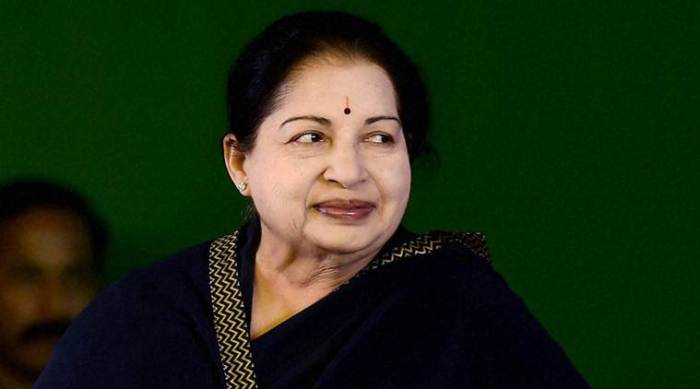
Our honourable ex-chief minister, Selvi .Dr.J.Jayalalitha, commonly referred as Dr.JJ and AMMA, took her last breath on 5th December 2016. She was admitted in Apollo hospital for more than 2 months, initially taken there for infection and dehydration issues. Hospital has not declared the precise medical report to the public even after the demise of her. It’s been just a week since the untoward incident happened and already Sasikala is in reign to become the General Secretary of AIADMK. This well planned arrangement has made common people suspect the death of Dr.JJ, whether it was natural death or not.

Dr.J. Jayalalitha’s life is a great story and inspiration for many, as she has faced many struggles, and not once she gave up, but used the struggle as a motivation tool and evolved from those torrid times right from her acting days to political career. For instance, during MGR funeral, she was pushed from the funeral car, and then she went on to become Chief Minister of Tamil Nadu 5 times since then and also had similar funeral procession for her own demise. Also, there were numerous corruptions cases, from color tv scheme to disproportionate asset case, inspite of being arrested few times, eventually, she has walked away from those cases, as she was not guilty and there was lack of adequate evidence.

Selvi.J.Jayalitha, besides extremely efficient Law and order, job opportunities through various industrial set ups in TN, efficient public infrastructure including roads, public transport, etc, has also executed various welfare schemes for people under the poverty line. She has definitely assisted them to get the basic needs at extremely low cost , such as water, food, grinder, fan, medicines, also schemes such as Amma mobile, Amma cinemas, Amma baby kit, etc, were initiated and have been received well by public. These are one of the strong reasons why Dr.JJ had immense support from the masses. Secondly, she has somehow managed to bond efficiently with the poor people, albeit she hasn’t met them often in the last ten years, except during election times. One reason for this bonding could be the branding done through the above schemes, all products under AMMA’s scheme had Dr.JJ’s picture, and hence, almost most of the household had her photo, even if they did not support her views. Moreover, Dr.J.Jayalalitha, who was not married and does not have any children, was fondly referred by everyone as AMMA. Hence, these are the reasons why the demise of Selvi.J.Jayalitha has left a void amongst everyone including haters, and hence, I definitely think that everyone deserves to know exactly what treatment was given from 22nd September 2016 to 5th December 2016 and hospital should also release photos of her during her hospital days, as Apollo hospital even released a press report, just few days before demise, stating chief minister had almost recovered, and can be discharged anytime.

Post demise of Dr.JJ, it is extremely disappointing to see how fast things are unfolding, as already ministers and MLA’s are treating Saskila as how they treated Dr.JJ, prostrating with extreme respect and also calling her ‘Chinna Madam. (next AMMA). It is inevitable that she will be the AIADMK head, and will be bossing the ministers, and will be ruling Tamil Nadu for the next 4 years. Common man might not be able to prevent Saskila coming in to power, as she will be heading the party not government, but if reports can prove that there was no mystery in the death of AMMA, people might gradually accept the transition, if not there can be few protests, and can even result in AIADMK party splitting.

To conclude, all one can hope as resident on Tamil Nadu the exact medical reports are published, and hope Sasikala , who definitely has had political experience from the background, can surprise everyone by doing her best to the public in the next 4 years, even if she indulges in corruption as it is difficult to cease that aspect. Also, the next election can witness a leading kollywood star entering politics, and also BJP will have better hold if the BJP chief minister nominee has some popularity amongst the masses, however, Mr.Stalin of DMK, will have the best possible chance to become the Chief Minister of Tamil Nadu in the next state election.

Chennai Metro Rail Project Phase-I Extension

Post Script:
In my view, the death is most likely natural, but medical reports should be published so everyone can get over this suspicion. Sasikla would have anticipated for this day for long, as she has played her cards from background for many years, but now, she will have all the powers and can rule from the foreground with her family members, which is highly unfortunate, as her family members had history of corruption cases, and they even used Dr.JJ’s fame many times to involve in illicit acts for huge monetary benefits, and now they have built an empire, even from being in the background. To conclude, I am against Sasikala coming into power, but I feel Sasikala, inspite of ongoing corruption which will never cease as it is part of the Indian political system, will surprise everyone with her schemes, as that is her only option and she is smart enough to know the pulse of people, hence, she will ensure medical reports are published, hope it is not fabricated one and also will bring in many freebie schemes, so public will start accepting her gradually, which will be unfortunate.

EMPLOYABILITY – SKILLSET FOR A GRADUATE

EMPLOYABILITY – SKILLSET FOR A GRADUATE

-Dr. S. Gowri, Professor – SIMS

The one parameter based on which the educational institutions are being ranked is the measure of employability of a graduate.   With regard to employability of a graduate, Dr. Eden Y Woon, Vice President for Institutional Advancement at The Hong Kong University of Science and Technology has said that “we are very firm in the belief that the university is not a vocational training institute. So the purpose of the university is not just to prepare you for jobs. The purpose of the university is really to give students a skill so that they can go and find a job but, more importantly, it is really to prepare students for what happens after they get a job. In other words, whether they can adapt to the job and adapt to changes that the world requires of them. That is where innovation, creativity and attitude come in.”

There is a general view prevailing among the academicians, parents and students that engineering colleges and B schools are responsible for employment of graduates.  Hence there is a need to educate them by saying that colleges are not employment exchanges and they can only help to enhance the life skill of the students and their adaptability to changing job environment.

While defining the learning outcomes for any course, many institutions are failing in competence in the areas of research or excellent teaching which would reinforce learning outcomes.   Hence the only measurable outcome or value is employability, which is being enforced by the industry by default.  In my personal opinion, relating education to employability may be right in the narrow minded peoples’ view.

Pros and Cons of Demonetization:

Pros and Cons of Demonetization:

rupee1-k4ac-621x414livemint

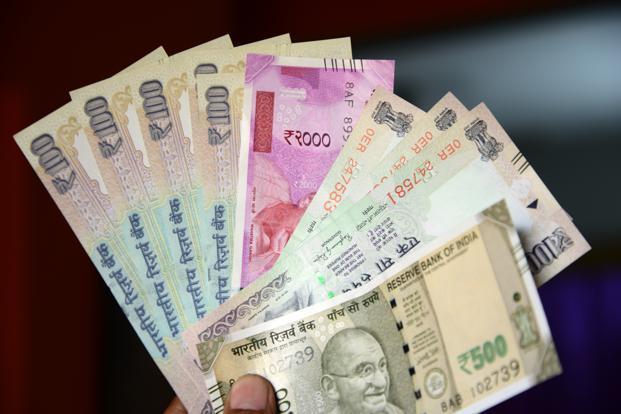
On November 8th, Prime Minister of India, Shri Narendra Modi, announced that Rs.500 and Rs.1000 banknotes will be demonetised from 9th November 2016.  When this huge news broke out, majority of the public were thrilled about it, and everyone considered this as a bold move by the Prime Minister. I was also excited and supportive of this economic decision which is mainly aimed to bring more security features to the currency, in order to curb fake tender; wash out the stock of black money and bring more accountability to enhance cash rotation. However, lack of adequate planning has affected most of the working adults in India. Let us analyse this huge economic decision in detail.

Firstly, I am a supporter of Narendra Modi’s vision for our country, but good vision alone is not suffice to execute various economic strategies, should be backed up with detailed planning. This move of demonetisation, albeit was planned few months in advance, lacked detailed strategising. The government did not give adequate focus on minute detailing such as the length of the new currency. The size difference between old and new currency are different, and hence, the ATM’s were not able to dispense the new tender, and it has to be recalibrated. The recalibration process is still ongoing, and in many cities, most ATM’s are shut and are yet to be recalibrated. In ATM’s that are recalibrated, money goes out of stock in few hours, due to huge demand.  Secondly, majority of the black money holders does not belong the have nots category, and hence, I do not support the idea of general public who do not possess black money to suffer immensely to cash out their hard earned money from bank. There are still queues outside ATM’s and banks after 4 weeks of demonetisation and most of the people waiting are from middle class and lower middle class of the society.  Government of India, should have spoken to the leading manufacturer of ATM, prior to demonetisation decision, therefore, the size of currency could have been addressed.

Secondly, the government should have planned to print new Rs.500 tender first instead of Rs.2000. Majority of the vendors find it difficult to provide change for the smaller transactions when the trade happens with Rs.2000. This has impacted majority of the medium and small business, including the farmers.  For instance, if someone buys vegetable for Rs.500, and provides Rs.2000 tender, then a small vendor might not possess the change of Rs.1500 to return to the customer. Moreover, these strategic errors can have an impact on the GDP in the coming quarter. Shri.Narendra Modi, I feel has been led down by the Financial Ministry, as these above issues should have been considered before taking the decisions, and also they should have consulted the chairperson of nationalised banks regarding banking transactions and currency requirements.

On the flip side of the coin, there are plethoras of positive outcome that are evolving due to the demonetisation. Numerous businessmen, who have evaded tax, are coming forward to declare their unaccountable money, and are paying tax for the same and ensuring that they get away from warrants against them.  This will surely have a positive impact on the micro economics, but it is uncertain to predict the impact on macroeconomics at this juncture. Furthermore, the Income Tax department, are regularly checking the accountability of bank deposits of more than Rs.2 lakhs, and the department are reviewing any major benami asserts and transactions and; are assuring to take action on such cases. In addition, this move also will help to curb purchase of illegal purchase of weapons around the line of control areas by the terrorists with counterfeit currency.

To conclude, I appreciate the move of demonetisation, however, with better planning this move would have had good impact on public and the economy. We are yet to see the great positive outcome of this strategy, and I am hoping people under poverty will get monetary benefits or atleast get to see the positive outcome soon, hence, eventually they will forget the sufferings they are encountering, and hoping their economic plight improves, if not BJP will have huge vote swing against them in the next general election.


Performance appraisal

Performance appraisal

– Dr.C.Priyesh,  Director, SIMS

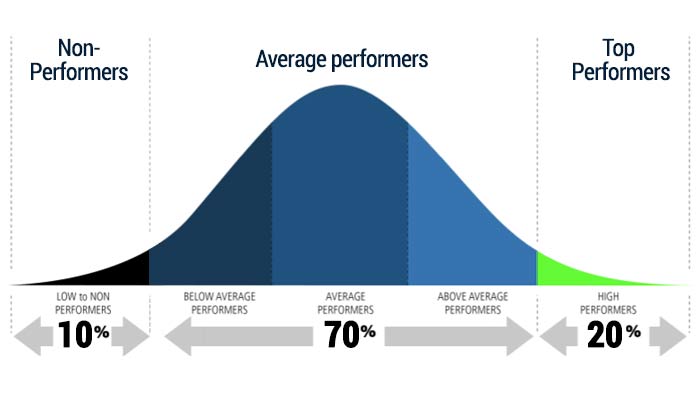
Performance appraisal is a regular activity in any organization. Most of the IT majors follow bell curve performance appraisal system. The bell curve is common type of distribution for a variable, and known as a normal distribution. In this appraisal system, management pre defines the % in each category. For example, appraisal system would have 4-5 categories ranging from low to high and for each category there would be a fixed %. For example 10% non performers, 10% mediocre performers, 60% good performers, 20% great performers and so on. Every department will be given this distribution and the leaders will be expected to fit the employees in one of these mandatory buckets. Individuals are reduced to statistical numbers as part of this system.

bell-curve

This system does have a negative impact in the morale and productivity. Unfortunately, this is a widely used appraisal system. In last one or two years, few IT majors started moving away from this appraisal system. The focus should shift from annual appraisal process to continuous mentoring and coaching. It does involve significant time but this helps in the long run. Companies should look for task based feedback and not wait for end of the year, course correction is the key. Positive attitudes need to inculcated and appropriate training and guidance should be provided. At the same time, even after repeated intervention if things don’t improve, then decisions need to be taken.

Instead of annual reviews, quarterly reviews would help and on need basis it can be task based as well. This helps for the feedback to be a continuous process. Annual appraisal feedback should not be a surprise for the employee. For a change at organization level, the reporting structure and span of control should also be looked at. Appraisal process should not be looked at as a statistical item or checklist item. Systems should enable the leaders to take right decision and not vice versa. While the debate continues on bell curve based appraisal model, it is up to the organization leaders to take a final decision based on the size and feedback.

National Anthem Before Movie Screening

National Anthem Before Movie Screening

– Kalyanaraman TR, JOINT SECRETARY
Sankara Institute of Management Science            
 

maxresdefault-1

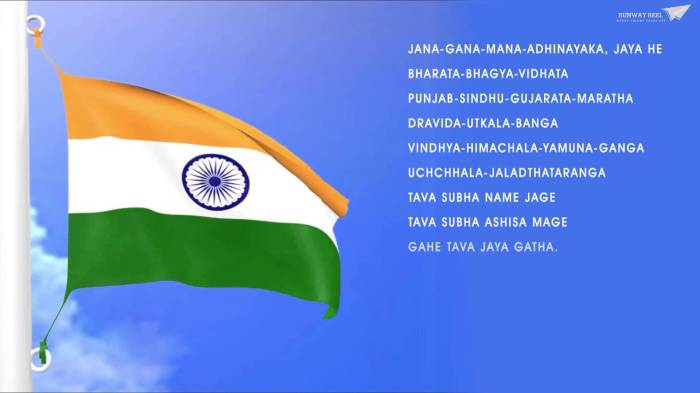
    The honorable Supreme Court of India has recently ruled that National Anthem will be played in all movie theaters before the movie begins. There are huge section of people who support this rule, as they are of the view that it will inculcate plethora of people to be more patriotic and will pervade the spirit of unity among the masses. However, I disagree with this group, as I feel that playing National Anthem at theaters is not a necessity, as it would not be sung with decorum
         There are places where it is important to sing national anthem with passion and pride. For instance, in this day and age, most schools play national anthem prior to the beginning of classes in the forenoon and majority of students sing it with great pride. Educational Institutes are places where students are not only taught about academic subjects, but also they get enlightened about discipline, respect, and patriotism. However, people visit the theaters for relaxation, hence, making everyone stand and sing anthem prior to movie might not be received well by everyone, and this might demean the pride of the Anthem if it’s not sung with interest and passion.
      There might be an argument from few groups that if playing national anthem before sporting events are mandate, then why not implement the same in theaters. I have a contrary view on this, as in sports, an individual or a team, are representing our country on the global map, and it is important to ensure that we sing our Anthem with great passion. Albeit sporting arenas are not battle field, but still our players are on national duties and we don’t like to see our country get defeated even in any sport, from cricket to kabbadi.
    To summarize, I don’t agree with the Supreme Court’s rule of playing the Anthem of our country in theaters, as it’s a place of entertainment, and there might be passion for few days from regular movie goers, but it will alleviate in the longer run.