Blog

Perception

     Perception     

Nishanthi.S
Assistant Professor

Sankara Institute of Management Science(SIMS)

       Mind has the power to capture the things which we see even that which the power of our eyes cannot do.  The level of thinking and imagination of the perceptional level which the individual could vary accordingly can be of a wide area.

        From a single thought, the imagination and the perception level could easily be found with the wide verity of results which could be adaptable by the various managers whichever, whomever, whatever or however the need depends on. Identifying the need and requirements of the concerned matter and issues which have been following certain nature and rules could be easily bend and made into use of the seeker.

      The power of perception which enable us to move forward in life which are both, positive and negative which could be used to overcome some points where the use of the particular concerned sort of energy could be on the perspective level where the implementation​ is done. Using of such types of perspectives in day to day life of a manager may have different type of after effects or result which could have the explanation that viewing from the particular point will be most appropriate or apparently there could be also other way in which the results will be effecting.

               The ability of an intellectual is to think of a situation and to view the scenario from different angles of life which may be depending upon the experience and wisdom that has been possessed by the management candidate. The origin of such kind of varying level of thoughts and explanations could be extraordinary or may be damaging.

Well, obviously it differs accordingly based on the nature and dependency of variables and the independency of the environment. The high peek of thinking could be developed by various ways and thus the improvisation on developing such different level of perception could be also achieved, although it depends up on the individual’s capability.

               The mannerism and the individual’s accountability on that could be developed as a gradual process such that the particular one could adapt the environment or could just blend into the surrounding which they inhabit. The way which they adopt such changes could be also depending up on the perspective level which the individual carries within him or her.

The way which the level of perception differs is that whether the particular individual is able to come up with any sort of ideas or thoughts which is apart from the normal one he/she sees or observes. This kind of ability is not often to be found. When such sort of ideas is been found or discovered the potential gained from these explanatory views with certain outcomes will comparatively much more effective than that of the normal one. As a result, the levels of observation also vary accordingly which in turn will have an effect on the overall result.

      Considering the perception, the ability to make the managers, individual or a group of individual, which differ in the net result, will always be accountable for something which is always new and creative. The new lifestyle which the modern society have been developing on the causes of different reasons is all about the perception which is in the different part of the world and their way of living satisfies the combinable diversity  and nature of living  in the particular​ environment.

It was someone point of view to rub the rocks and make the fire out it, then for the easiness the method was developed so that the effort will be reduced. All these sort of difference which takes place is because of some motivation or goal which shows the observer to get a new way of thinking by which the achievement could be possible. This way of thinking was always possible with the way of thinking capacity which is more over different from the existing methods and ways that are being traditionally followed. Changing the course of the followed one and taking the new one will have the obstacles to be faces but for the success these problems has to be overcome at once.

       The knowledge from books or resources will not always help for such reasoning. The perception level or the power of a particular manager is to view thing in different way, will be produced only if the creative ability is there. By such ability only these nature could be harvested fully.

     For example, 6 and 9 are two numbers which could be read as either of them by keeping it upside down. It’s the matter by which the point of view is been implemented. So the way of thinking and the observation is all that matters.

 

Stress Awareness Day – a must for Corporate

Stress Awareness Day – a must for Corporate

Dr. Priya Kalyanasundaram

Professor, Sankara Institute of Management Science

           Stress it is the body’s way of responding to any kind of demand or threat. When you feel threatened, your nervous system responds by releasing a flood of stress hormones, including adrenaline and cortisol, which rouse the body for emergency action. Today workforce are experiencing high level of stress due to  long working hours, workload, tight deadlines, high targets, type of work,  pressure to perform, etc,. This leads to fatigue, irritability, poor communication, and quality problems/errors. Due to this they may feel frustrated or “burned out” when they are having problems with peers or customers. It can be a real killer, both in the workplace and in our day life. When we are faced with a challenge, or a threat to our well-being, the body experiences stress. According to the study conducted by WHO, it has been estimated that 57 million people are affected by depression. ISMA Survey published on 1st November 2017 has  revealed that 94% of people experience work-related stress but only 32% of them feel that they can speak to their manager about it. Stress levels for women employees are higher, particularly in India, where they are managing both home and office equally. Work-related issues contribute more to people’s stress levels than difficulties regarding relationships, health and finances combined. The death of Vineet Whig, former COO of South Asia division of Encyclopedia Britannica, who fell down from the ventilation shaft from the 19th floor of a building early this year, sent alarm bells ringing in many corporate offices. They need to conduct Stress Awareness day to make them aware of the stress in our lives and how it affects the health.

History of Stress Awareness Day

Stress Awareness Day was established by the International Stress Management Association (ISMA) to help give information on stress, and strategies on how to address it for both companies and individuals. This organization is focusing on helping employers by providing comprehensive guidelines for establishing a program within their organization, and individuals by looking after their health and well-being on a day to day basis. It is an opportunity to start looking after yourself and your life, and to break down the individual stressors in your life. Failure to deal with stress can lead to serious health problems, including high blood pressure, heart diseases, and a decline in your immune system. Once you start experiencing these symptoms they can landslide into each other, resulting in growing sickness, and by extension, more stress. It’s truly a self-feeding problem, and a cycle that is necessary to control to enjoy our lives.

How to Celebrate Stress Awareness Day

It can be celebrated by organising meditation and yoga sessions, creating a culture that promotes stress management, managing the mindset that says I don’t have time to manage stress. Managing your stress while it’s happening, Take time to examine your life and find out where all the stressors lie and start looking into taking steps to remove them or find ways to mitigate them. Many corporate are trying to break the pattern by bringing in yoga experts and organizing activities they are also ensuring that canteen serve healthy and hygienic food for the employees. Stress can be a killer, don’t let it take one more day from your life, act now and start removing stress from your life.


Qualities of an Ideal Teacher (Requirements for the Perfect Teacher)

Qualities of an Ideal Teacher (Requirements for the Perfect Teacher)

Dr. S. Sundararajan


Every teacher and faculty must do a reality check of each of these qualities sincerely. Being a teacher is not so easy, tick off what they have. Pick up what they don’t posses. Improvement happens. We need to be better and better at teaching and also teaching – learning process. Learning is infinite in this information age and knowledge economy.


Along with sound foundation of knowledge, skill, dedication a teacher, a mentor (and any leader) should have

  • 360o eye sight to see positive of anything before negative
  • Helping hands
  • Clear mind
  • Clean heart
  • Genuine and selfless concern about  students, colleagues and all
  • Mother’s heart to forgive the student
  • Quest for quality
  • Crystal clear behavior


A teacher should be always devoted to develop his student that he becomes better and advance version of the teacher himself. Apart from above all of these, Teacher is a very honest person and a very hardworking person. As a teacher touches the future, he/she should have a strong ‘future-orientation’.


Following are the essential orientations strongly recommended:


  1. Quality-orientation
  2. Social-orientation
  3. Scientific-orientation
  4. Moral/ethical/spiritual-orientation
  5. Result-orientation


Inspiring personality and motivational skills are reflecting the impact on the students and their lives over a period of life.  The students who were taught in 90’s were asked to give feedback in 2016. Most of them reported upward trend in their lives.


As Swami Nanda states: Education is manifestation of qualities already inherent in a student. So, a teacher’s job is to facilitate so that the student may exhibit those qualities for the benefit of society, nation, world, family and self. Personal traits good, but what those personal traits give to the society is also important.


What makes a good Teacher Great?


All teachers are good! Great teacher scores the highest points on two fronts: task and students rapport. Only the great teacher begets another great teacher.

  • Good in sharing his knowledge on the subject as relevant to the students whom he is teaching. So, before teaching, he should learn himself.
  • Good as Counselor to the students and also to their Parents. Good as Mentor to the students.
  • Positive outlook, capacity to listen, possesses and practice life skills and finally devoted to the profession.


A great teacher is the one

  • Who identify the strengths and weaknesses of a student and deal accordingly.
  • Teacher finds the dream of each student and leads him to achieve it.
  • He / She update the knowledge every day especially in specialized areas.
  • Teacher learns the latest teaching pedagogy/ Heutagogy of teaching.
  • Add on skills; especially communication and inter-personal relationship.
  • Innovativeness in teaching style.
  • Never hurt a student for no fault of theirs. Never be rude to a student when they show genuine gratitude and love for a teacher. Never make your own assumptions as a teacher and never put a student down so much that it makes the student get into emotional or psychological stress
  • A student can always feel the enthusiasm and interest shown by the teacher for student development. Genuine teachers – the vibes can be felt by the student community
  • As a teacher be loving and encourage students, be kind to them and not harsh. A few messages from a teacher like ‘hi how are you’, ‘hope all well at your end, what are you doing these days ‘goes a long way for a student. The ego or pride of a teacher doesn’t go up or down if it is sent to a student.
  • Last but not the least, just like we teachers expect remembrance, gratitude from our students, even as students they feel good if as teachers we show that little bit of care and concern for them.


Apart from our education and knowledge we posses, as a faculty, I believe the following qualities are very essential for a teacher;


  • Vocation for teaching. (passion – natural or self-created)
  • Patience and perseverance. (purity too)
  • Updated with the new teaching methods and techniques.
  • Keep learning and educating self.
  • Approachability and the ability to develop an excellent rapport with our learners.
  • Self-assessment.
  • Effective management (self and class) and communication skills.
  • Organized and well prepared for the lessons.
  • Ability to explain and clarify things in a simple way.
  • Treat the learner fairly.
  • Ability to anticipate learners’ difficulties/problem. (Coming down mentally to the level of students’ mental level)

DIGITAL TECHNOLOGY TRANSFORMATION IN LOGISTICS AND TRANSPORTATION

DIGITAL TECHNOLOGY TRANSFORMATION IN LOGISTICS AND TRANSPORTATION

Dr.D.SathishKumar

Assistant Professor

Digital Technologies have spread through among all the areas, and logistics companies are one among the areas. To make the best and efficiency combined with speed and making the movement is the key to success in current competitive advantage.

MAXIMUM ADVANTAGE IN TECHNOLOGY FOR STRATEGIC PLANNING

Many transportation companies invest about 5% of their annual revenues in digital operations, by focussing on their customer interface. In the growing digital world people are using mobile apps for faster solutions, logistics companies to offer a personalised experience for their customers and also find the vehicles accurately by tracking systems. Companies are also focusing on new business models and value added services and innovation solutions to the customers.

Digital Logistics

BIG DATA OPERATION

big-data

 Big Data technology are used to cut the cost and take real time action, in a competitive environment where margins are small and requires logistics companies to take greater control over their supply chain and ensure the processes takes place seamlessly at greater speed. Logistics companies are using big data technology for analysing capture the data and streamline the operations and improve the supply chain.

Data base automation, Automation of load building and optimizing the inbound and outbound movement of cargo, maximum usages of available resources, waste reduction and lean functions.

Real-time fleet management solution facilities specialised of using technology of trucks and other delivery vehicles, utilization of empty containers by matching nearest load. Mobile app solutions enable greater transparency into the operations.

Transparency in inventory and supply chain management system shipment across the supply chain improved tracking of inventory movement, facilitates the reduction of network-wide inventory levels, and enable managers to respond dynamically and in real-time to any events or issues that disrupt the supply chain.

Analytical data makes explicit greenhouse emissions and carbon footprints of truck and machinery operations, allowing companies to take steps to become carbon-neutral, thereby contributing to cause of Green logistics.

Logistics companies apply the wealth of data related to the movement of their goods and trucks to identify patterns related to customer trends, identify what works well, unearth market insights, and gain competitive advantages.

SECURITY THROUGH DIGITAL TECHNOLOGY

Supply chain problems are the main risk in global business environment for logistics companies. Technology enables the supply chain in many ways.

Digital Locks make the inventory more secure, offer a robust layer of security, in additional to physical security. Optimal route planning combined with real time tracking of cargo movement through mobile apps enable routing of cargo by avoiding congestion points and trouble spots to minimize risks and interruption.

IoT ENHANCE OPERATION

The earliest applications of RFID and IoT (Internet of Things) technology have been in asset tracking and warehouse management. For simple tracking inventory of pallets and crates, enterprises use sensors, RFID and other technology to gather information on the state of the connected item, such as when the thing requires maintenance, the expected life of the thing.

IoT contributes to highly integrated warehouse management solutions, enabling precision movement and accurate tracking of movement of goods. The applications of IoT instruments in logistics are virtually endless, ranging from tracking transportation goods in a temperature controlled way to ensuring the correct package reaches the correct location at the specified time.

HIGH CUSTOMER SATISFACTION

            Proactive transportation and logistics companies go beyond improving their operational efficiency and retaining high control over other operations to enhance customer satisfaction.

            Technology improvement a shift to a customer observed operating model, enabling the delivery of personalised and customer focused logistics with high cycle time.

            Hyper connectivity facilitates not only big data, but also speed data. Speed and timeliness manifesting in seizing the moment enable companies to match customer expectations and deliver competitive differentiation over its competitors.

SCM – A STRATEGIC ADVANTAGE

SCM – A STRATEGIC ADVANTAGE

Dr.B.Sudhakar

Director

Sankara Institute of Management Science

Business breakthroughs don’t just happen by accident.  They come from the keen insights derived from learning the latest concepts, sharing in the experiences and best practices of others, and understanding changes in the evolving business environment. Supply chain management is the latest buzzword in the management arena. A network of facilitators and distributors who perform the functions of procurement of materials, transformation of materials into semi-finished or finished products, and the distribution of the finished products to customers is known as a supply network. Supply chain is common for both manufacturing and service industry. The complexity of the supply networks varies from industry to industry and the magnitude of the industry.

A very simple ideal supply chain for a single product is one where the raw material is procured from vendors, transformed into finished goods in a single step, and then transported to distribution centres and ultimately to the customers. But in reality supply chains have multiple end products with shared components, facilities and capacities. The flow of materials is not always along the same network but various modes of transportation may be considered and the bill of materials for the end items may be both deep and large. Traditionally, marketing, distribution, planning, manufacturing, and the purchasing organizations along the supply chain operate independently. Organizations set their own objectives and these are often conflicting. An organisation’s marketing objective of high customer service and maximum sales conflict with the manufacturing and distribution goals. Many manufacturing operations are designed to maximize throughput and lower the costs with little consideration for the impact on inventory levels and distribution capabilities. Similarly purchase decisions are done with available information. The result of these factors is that there is not a single, integrated plan for the organization whereas it resulted in as many plans as the businesses. Thus there is a need for a system through which the different functions can be integrated together. Supply chain management is a strategy through which such integration can be achieved, where the entire material flow is owned by a single firm and the various channel members operate independently. Therefore coordination between the various players in the supply chain is imperative for its success and effective management. A team is more competitive when each player knows how to be positioned.

Thus organizations are focused on building strong supply chain channel members and built their relationships to make a coordinated effort to win the competition. Today competition is between the supply chains of the organizations rather than the individual company. Hence Supply Chain Management has become a strategic advantage for organizations in the competitive world.

India an Retailing Hub

India an Retailing Hub

Dr. Priya Kalyanasundaram 

Professor

Sankara Institute of Management Science(SIMS)

Indian Retailing sector has become one of the booming sectors with a market size of USD 585 million and it is expected to grow reach 1080 million by 2020. This sector is experiencing growth, not only in major cities and metros, but also in Tier-II and Tier-III cities.  The major players FMCG are focusing more on rural market. With an increasing investment in infrastructure, retailers would be able to increase their access to high-growth potential rural markets. India’s ecommerce market is expected to become the world’s largest market. The retail industry’s business to business (b2b) is expected to reach US$ 700 billion by 2020 and business to consumer (b2c) is to reach US$ 26 billion.  With this increasing trend many Multinational companies like IKEA, Amazon, Wal-Mart, Bong and Olufsen have started investing in India.

Investment Analysis show that,

  • IKEA has purchased 14 acres of land in Bangalore for setting its third retail outlet in the country.
  • Future group has entered into a joint venture with Khimji Ramdas group in Oman.
  • Amazon has planned to double its storage capacity in India.
  • Bong and Olufsen , Danish stereo and speaker system maker has a plan for selling 8 to 10 standalone satellite in cities like Kolkotta, Hyderabad , Ahemdhebad .
  • Amway India has planned to open 50 retail stores by 2018 for enhancing direct and online sales of its products.
  • The world’s largest spirits maker Diageo, has planned to open a new business services centre in Bengaluru and give employment to 1,000 people, by end of 2017 .
  • Marks and spencer has plans to open annually 10 new stores in joint venture with Reliance Retail by 2017.

Government Initiatives

         Government of India has taken many initiatives for the growth and development of the retail sector. Until 2011 FDI was not permitted for multi brand retail or in any other retail outlet in India. Only during January 2012 Indian government allowed 100 per cent foreign Direct Investment and the growth of the Indian retail industry got accelerated. It  has approved 51 per cent  of FDI in multi-brand retail and increased FDI limit to 100 per cent (from 51 per cent) in single brand retail, and also has a plan  to allow 100 per cent FDI in e-commerce, under the plan that the products sold must be manufactured in India so to gain from the liberalised regime. The Government has changed the Foreign Direct Investment (FDI) rules in food processing, in a bid to permit e-commerce companies and foreign retailers to sell Made in India consumer products.  As per Indian Council for Research on International Economic Relations (ICRIER) prediction the Indian economy will grow by 13 percent for unorganised sector and 10 percent for organised sector. In India organised Retail Penetration (ORP) is only 8 – 10 per cent which is low in 2017 compared to other Countries US (85) Per cent which indicates strong potential for organised retail in India. Organised retail in India is growing at CAGR of 20- 25 per cent per year and it is expected to reach 18-20 per cent by 2020 and unorganised retail would hold a major 80- 82 per cent share. Food and grocery segment by 2020 is expected to account for 66 per cent of the total revenue followed by apparel segment readymade garments and western outfit has been growing at 40 -45 per cent annually. India has replaced China in retail sales in 2017 and it is also expected to double by 2020.

Path Ahead

  The Indian population is going towards online retail in a big way. As today’s consumers are keener towards online shopping. The online retailing is expected to grow to US$ 70 billion during 2020. E-tailers have started using creative ideas to keep the consumers always connected with them. So E-commerce industry is one of the fastest growing industries and it is bringing a revolutionary change in the retail industry. Many technology stores in India are focussing to integrate physical and online stores and trying to develop analytical model to understand the customers and to manage the supply chain.

COMMUNICATION ANXIETY: FEAR OF STAGE FRIGHT

COMMUNICATION ANXIETY: FEAR OF STAGE FRIGHT

– Nishanthi.S

 Professor

Sankara Institute of Management Science

Communication Anxiety is found everywhere. The best part about this is that it can be cured. An action that is intended to deceive, I mean no tricks here, and no Sanskrit mantras. All one need to do is just understand why this is scary and need to look at it in a different aspect and let it go away from us.

Normally people suffer from this when speaking to groups is pretty normal. Most of the people are suffering from it, and let us make this clear – Anxiety is nobody’s friend. Yet, we must notice that it’s not the same for everyone among us.

By many people it is said that this Communication anxiety can be cured if they can talk, if they communicate. But many believe that communication is a skill you’re born with – so if you don’t have it, you’re out of luck.

Few people are really comfortable when they speak to peers, and totally uncomfortable with the strangers. And for the rest of the people it is vice versa and they are comfortable with strangers because they will not meet them again but not with their peers, thinking and bothering about maybe they will find faults in them.

Communication anxiety is found with everyone who has some form of it. So now we should see does it really matter??!!!!! Yes indeed it does. The anxiety interferes with so many things in our life like studies and work place in that matter because we are here so much worried about others and finally avoid speaking and can lead to stress that will ultimate effect the entire of ourselves.

People say there is a logical way to banish anxiety that helps to completely get rid of this communication anxiety. It is quite easy to come out of it but not necessarily easy because we’ve been doing what comes naturally – that is, worrying about looking bad.

The important thing to keep in mind always is to focus on yourself to focusing on what you want to do. It’s natural to think about ourselves. But that means it’s natural for everyone else to be thinking about themselves, whatever the reason for looking at them. Yes, even if they look angry at us and that is how it makes us feel.

There are some ways to practice to avoid this. Try listening to a short news item on the radio from beginning to end without wandering off to think of something else. Practice to repeat something you have by heart for a minute mentally. See if you can give your full attention to the server when they tell you the day’s specials. Look, listen, process, without doing or thinking anything else.

Communication anxiety can be set out by developing an effective Communication, which is a learned skill, just like riding a bike. The more you practice, the better you become. Effective communication is about listening, ensuring others get your point, and persuading others to take action on what you’re saying.


BIG DATA AND BUSINESS

BIG DATA AND BUSINESS

K.Thirugnana Sambanthan

Professor,

Sankara Institute of Management Science


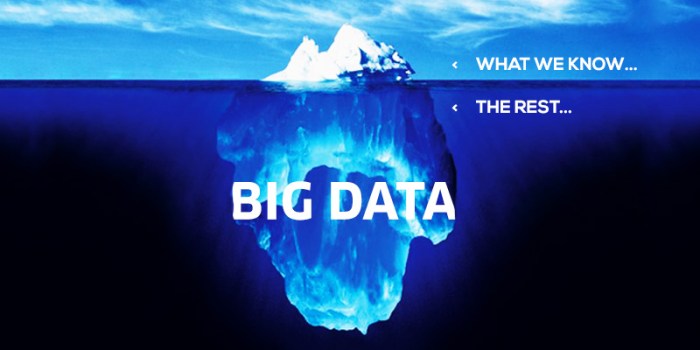
Big Data is a term used to depict collection of data that is enormous in size and yet increasing exponentially with time. A data is so large and complex that none of the traditional data management tools are able to store it or process it efficiently. Bigdata can be categorized into three: Volume, Velocity and Variety.

big-data.jpg


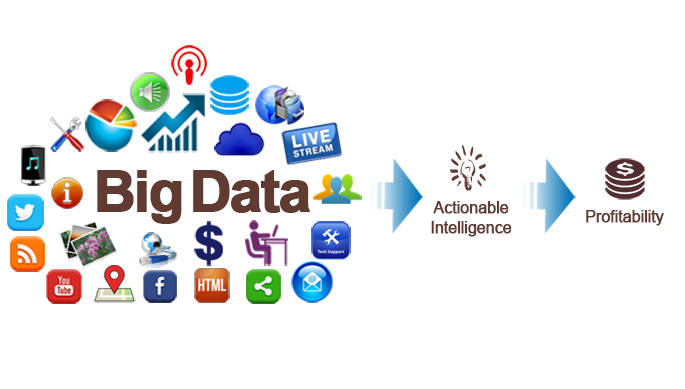
Volume: Organizations collects the data from relative sources, which includes business transactions, social media and information from sensor or machine-to-machine data.

Velocity:  Data streams unparalleled speed of velocity and have enhanced in timely manner. RFID tags, sensors and smart metering are driving the requirement to deal with torrents of data in real time operations.

Variety: Data comes in different form of structured, numeric data in traditional databases to unstructured text documents, email, video, audio, stock ticker data and financial transactions. Bigdata based on variety is categorized into Structured, Semistructured and Unstructured.

 The challenges in Big data is data analysis, search, sharing, transfer, visualization, querying, updating , information privacy, capturing and storage of data.

Examples of Big data : Facebook, Whatsapp, Stock Exchanges, Transportation.

 Word Cloud "Big Data"

 Importance of Bigdata

Each and every company has its own way of using data. If the company uses the data more efficiently it will have more potential to grow. The company can collect efficient data and it can analyze it effectively.

  1. Bigdata can help in creating new product since the needs and want of the customer can be clearly analyzed and tabulated.
  2. Bigdata helps in analyzing the market condition correctly thereby gives a competitive edge over the Business competitors
  3. Bigdata can do sentiment analysis. It gives correct feedback about the customer’s perception and  it also contains tools which can help in improving the online presence of the company.
  4. Big data can bring cost advantage to the business since large amount of data are to be stored and the tools provided by Bigdata helps in enhancing the Business effectively.
  5. The tools of Bigdata helps in Time Reduction since they can process large amount of data quickly.  This helps in quick decision making. 


 yourstory_BigData


Role of Bigdata in Business

Every big business organization requires precious data and insights. Big data plays a very vital role in finding the target customers tastes and preferences. Bigdata can help in predicting Customers needs. Bigdata helps in achieving Business Goals. Bigdata can help the organization to advise relevant products and services to the customer.  Bigdata helps in making Strategic Decisions.  Bigdata helps in maintaining operational efficiency in an Organization.

Internet of Things(IOT) and BigData are the vital technologies in the current Business World.


Paper currency: Past to Present

Paper currency: Past to Present

Saravanan.S

Professor

Sankara Institute of Management Science

The popularity of India as nation has gained significant popularity in recent times. This popularity is due to the bold decision of central government to make high denomination Rs 500 & Rs 1000 not valid medium of exchange. High denomination currency has always been the subject of debate in function of economy. To understand the currency we have to travel back in time to explore the evolution of currency.

In ancient times the mode of exchange was the coin minted in silver or gold. The first Indian coins were minted in 6th century BC by Mahajanpadas. These coins do not have fixed shape which was made up of silver with several symbols. This practice created a monetary system in the kingdoms of India.

Pre independent India currency

During the British rule in India, the Paper Currency Act of 1861 gave British the monopoly to issue notes in India. The 1867 Victoria portraits series were issued in the country for effective control of illegal currency. The series of first British Indian notes were of Rs.10, Rs.20, Rs.50, Rs.100 and Rs.1000. In 1903 additional currency were issued with Rs.5 as the lowest denomination. Due to the World War 1 paper currency of Rs 1 was introduced in 1917. In 1923 the King portrait series was started with Rs.5, Rs.10, Rs.50, Rs.100, Rs.500, Rs.1000 and Rs10,000.

In 1935, Reserve bank of India was setup to manage the currency system. In 1938 RBI issued first Rs.5 note with additional denomination of Rs.10, Rs.100, Rs.1000 and Rs 10,000 were issued. In 1940 Rs.1 was reintroduced followed by Rs.2.

Independent India currency

In 1953 Hindi was displayed in the new notes and name Rupiaya was changed to rupee. In 1954 Rs.1000, Rs.5000, & Rs 10,000 were reintroduced. In 1957 the rupee was decimalized and divided into 100 paisa. Due to shortage of paper in 1960’s the size of the notes were reduced. In 1980 the success of Aryabhatta, RBI issued new notes citing the advancement in science and technology in Rs.1, Rs.2, Rs.5, Rs.10 & Rs.20.

In 1996 the new Mahatma Gandhi series notes were issued from Rs.10 to Rs.500. It replaced all the notes in circulation. The new notes had changed watermark, security thread, latent image and intaglio feature for the visually handicapped. In 2010 RBI adopted as the official symbol for the Indian rupee.

Demonetized Indian currency

Due to increase in corruption and black money of high value currency and the suffering of economy, the government decided to demonetize the currency in 1978. Higher than Rs 100 were taken out of circulation and major haul in banking system were undertaken. Due to the shortage of currency note the RBI issued the Rs.500 in the year 1987 and Rs.1000 in the year 2000 for smooth flow of transactions. In 2016 the government of India again opted for demonetization of the high value currency to curb the high level of fake currency, corruption & black money. Future of the currency system will determine the growth and strength of the economy.

FLIPKART GLOBAL

FLIPKART GLOBAL

Dr.D.Sathishkumar

Professor, SIMS

Flipkart is the one of the Largest E-Commerce firms in India. The new plan of Flipkart is to sell their products all over the world, which includes 190 countries initially with the support of e-bay India subsidiary. The new plan called Flipkart Global will allow over 100,000 sellers on Flipkart platform to sell their products online over 190 countries globally.

The new plan will enable sellers to export their products globally and introduce new products with Flipkart platform to access all the countries in the world. This new plan aims to bring the products to India from other parts of the world like Amazon India, who launched the Global store two years back offering fashion brands, books and other electronic products from US market to Indian market.

This new plan will enable sellers from India to access all over 171 million active customers of e-bay over 190 countries in the international market. The other strategy of Flipkart is to increase the popularity with few millions of non-resident Indian online shoppers globally who like to access the Indian products.

More than 25000 sellers on the e-bay India platform will join flipkart platform. Flipkart plans to undertake a nationwide campaign to promote more sellers to export their products to international platform.

The launch of Flipkart Global will lead India to be one of the leading online retailers in global market with local products, and enabling trade to help generate both direct and indirect employment opportunities and bring in much needed foreign exchange.