Blog

KEY HIGHLIGHTS OF THE ECONOMIC SURVEY 2017-18

KEY HIGHLIGHTS OF THE ECONOMIC SURVEY 2017-18

Dr.S.Sundararajan

Faculty -SIMS


  • Goods and Services Tax (GST) has given a new perceptive of the Indian economy and new data has emerged. There has been a fifty percent increase in the number of indirect taxpayers. There has also been a large increase in voluntary registrations, especially by small enterprises that buy from large enterprises wanting to avail themselves of input tax credits. The Survey also stated that fears of major producing states that the shift to the new system would undermine their tax collections have been allayed as the distribution of the GST base among the states got closely linked to the size of their economies. Similarly, there has been an addition of about 18 lakh in individual income tax filers since November 2016.
  • India’s formal sector, especially formal non-farm payroll, is substantially greater than what it currently is believed to be. It became evident that when “formality” was defined in terms of social security provisions like EPFO/ESIC the formal sector payroll was found to be about 31 percent of the non-agricultural work force. When “formality” was defined in terms of being part of the GST net, such formal sector payroll share was found to be 53 percent.
  • For the first time in India’s history, data on the international exports of states has dwelled in the Economic Survey. Such data indicates a strong correlation between export performance and states’ standard of living. States that export internationally and trade with other states were found to be richer. Such correlation is stronger between prosperity and international trade.
  • India’s exports are unusual in that the largest firms account for a much smaller share of exports than in other comparable countries. Top one percent of Indian firms account only for 38% of exports unlike in other countries where they account for substantially greater share – (72, 68, 67 and 55 percent in Brazil, Germany, Mexico and USA respectively). Such tendencies were also found to be true for the top five or ten per cent of the Indian companies.
  • It was pointed out that the Rebate of State Levies (ROSL) has increased exports of readymade garments (man-made fibers) by about 16 per cent but not of others.
  • The data highlighted another seemingly known fact that Indian society exhibits a strong desire for a male child. It pointed out that most parents continued to have children until they get number of sons. The survey gave details of various scenarios leading to skewed sex ratios and also gave a comparison on sex ratio by birth between India and Indonesia.
  • The survey pointed out that tax departments in India have gone in for contesting against in several tax disputes but also with a low success rate which is below 30 per cent. About 66 per cent of pending cases accounted for only 1.8 per cent of value at stake. It further stated that 0.2 per cent of cases accounted for 56 per cent of the value at stake.
  • Extrapolating the data the survey indicated that growth in savings did not bring economic growth but the growth in investment did.
  • The survey mentions that collection of direct taxes by Indian states and other local governments, where they have powers to collect them is significantly lower than their counterparts in other federal countries. A comparison has been given between ratios of direct tax to total revenues of local governments in India, Brazil and Germany.
  • The survey captures the footprints of climate change on the Indian territory and consequent adverse impact on agricultural yields. Extreme temperature increases and deficiency in rainfall have been captured on the Indian map and the graphical changes in agricultural yields are brought out from such data. The impact was found to be twice as large in un-irrigated areas as in irrigated ones.

The Economic Survey, which sets the scene for Finance Minister’s annual budget, forecasts that the country’s gross domestic product (GDP) will grow by 7 percent to 7.5 percent in 2018-19.

The Economic Survey for 2017-18, presented in the Parliament by Finance Minister on 29th Jan 2018, underlined the need for more reforms. The survey was authored by Chief Economic Adviser Arvind Subramanian.


Expectations by the millennial generation from their Employers

Expectations by the millennial generation from their Employers

Who are Millennial?

The millennial generation is that cohort born between 1980 and 2000 whose first graduates entered the work force around 2002. They will continue to do so in large numbers, until around 2022 thus making them the largest segment in the workforce in the near future with power to take the centre stage and push their organizational agenda. Millennial have every reason to assume that all necessary information is available at the click of a button. Millennial are correct in their understanding of the appropriate and ethical use of information and knowledge to make quality decisions and cope with ambiguity of the global landscape, the very skills most required in today’s organization.

Millennial want to work differently, including a better work-life balance and a more flexible workplace. They also have a different set of values. Having grown up and entered the workforce during the recession, they are more cynical about the commitment their employers are likely to make to them. They’re less bound by feelings of loyalty to the organization and tend to change jobs more frequently as they seek new opportunities and challenges. But they are also idealistic, driven by a sense of purpose and a desire to make a difference in the world and fulfil their potential.

According to the Bureau of Labor Statistics (US), the average large company will lose 30 to 40% of its work force in the next 5 to 10 years.  The replacement for the baby Boomers’ mass exodus is, and will continue to be the millennial. Professionally, if Gen X and Baby Boomers do not attract and connect with the Millennial, the loss could be devastating. Most importantly, millennial have a different way of looking at leadership. Traditional markers of effective leadership, such as personal dynamism, powerful networks, and skill levels leave them relatively unmoved: according to the PWC survey, “visible,” “well-networked,” and “technically skilled” leaders score low among Millennial. By comparison, a leader’s ability to bring out the best in those around them scored high: qualities such as being “inspirational,” “personable,” and “visionary” were at the top of the list. It’s no wonder: Millennial tend to value the team over the individual and prioritize validation, recognition, and support. A leader capable of bringing the organization together, instilling a sense of purpose, and acknowledging group efforts is the perfect fit for this value-driven and recognition-seeking cohort.

 “How Millennial Want to Work”

  • Millennial employees are not ready to fit into 9 to 5 mould which their parents have worked.
  • Millennial value feedback and has a passion to improve things using technology.
  • They tend to be quick learners they learn things through multiple channels like classroom training, online training etc.
  • They prefer instant feedback so to know how they can do things much better and they seek promotion much more quickly than previous generations.
  • They are not afraid to take risks and as employers we cannot expect them to stay with us for their whole careers
  • A fun workplace is also a key requirement of the millennial generation with social benefits such as sports clubs, recreation room etc.

Challenges

There are of course challenges in having different generations working together. Employers need to find out ways to help improve communication and understanding across generations, as well as opportunities for senior staff to become mentors. Therefore Organizations need to focus on developing better managers for—and among—their young people.

Leader and Follower – No.1 and No.2

Leader and Follower – No.1 and No.2

Nishanthi.S
Assistant Professor
Sankara Institute of Management Science(SIMS)

There is a number that have got avoided or even not noticed by anyone because; there is No.1 and No.3 before and after it…..Does it sounds like a Puzzle!!!!

This commonly states a universal fact that something is much better is in front of it and something much worst is after it. Even something with a positive and also even with negative got noticed but when it comes to the middle one it is just a kind of ignored. Some alike there are much more drawbacks which are being faced by any entity which come (No.2) Second.

Second chance is a thing which is often been avoided without any sort of consideration. The thing which are being taken or has to face by getting a second chance will be much of with a great and accurate level of danger or a chance of carefulness should be taken. It is because that second is the point where it turns out to be a better or the worst one. In any sort of competition the one with first place and the one with third place are much more projected since first place gives or signifies the winning and the third one gives the failure but the number 2, which is often not taken for conversation even though the prizes have been given.

Always the position with the second will have more chance to be under pressure since it has to go ahead of the first one and should not go beyond the third one yet all the others have to face the same scenario but the second one have the most important factor that it is beyond the first place. In context the pressure and work done by the second one is always more and harder such that it could be the first one or should not go behind.

The more adaptive or change of plans which could be more potential will be with the second one. The first will have to just keep up with the current position, so the more the pressure the more the potential develops. Hypothetically, when comparing with each other there are several facts that could make the second position to be taken or given more consideration with the proper justification in the appropriate way.

~~ the changing world economy and the changing nature of the market as a global entity the positions has a vital role which act in accordance.Each and every entity in the market as a whole tends to have a competitive nature within them right from the beginning. It’s the pressure on them for attaining the goals which makes them to capture the positions in the market. The level of planning and implementation of the action plans or the strategies (obviously will be unique) which will lead them to acquire their positions. Being in that positions, they further analysis they bring out the other abilities which makes themselves to have consistent way of improvement.

            The corporate world have been subjected to have heavy competition where the single point of failure might even be a snap of a figure which will push them back in to the last position, so constant updating and upgrading the business strategies are to be made regularly for being the market leader.

From the marketing perspective it is important to be the market leader who enjoys the largest market share. Always the follower in the market tries to win over the competition to become the market leader. But as discussed earlier, in marketing parlance we cannot ignore the follower. He is the force behind the market leader to perform to sustain in the market.  Let us look at the world market for Shoes in the online market segment. The world market shows Nike, Addidas and Jorden as the top shoe brands. Nike has been leading the market with its core competence of design, feel and comfort. Addidas has been focusing on the competitive edge on these factors but could follow the leader-Nike. Similarly Jorden is trying to capture the market from Nike and Addidas with its product range.

So we understand that Addidas being at No.2 position has more pressure to enhance itself in various aspects to win over the competition against Nike-the No1 in the market. Jorden, the No3 in the market tries to analyse the market and formulate the winning strategies to overcome the competition from Nike (No1) and Addidas(No2) respectively. Hence when there are resources or the potentiality available in abundant, the chances of getting into first place or the market leader is more likely.

Bitcoin Economy and Indian Financial System

Bitcoin Economy and Indian Financial System

Prof.S.Saravanan

Sankara Institute of Management Science

Bitcoin came to existence in 2009 and is the first digitally decentralized currency that one can use for trading through online platform. Anyone who wants to use this Bitcoin must have a digital wallet that is in form of an application, cloud store or hardware. It was introduced to give people a substitute system for banking.

Traditionally buying and selling of commodities has taken place under a unified system of payment. The central bank has always acted as an independent intermediary between the two or more individuals involved in trade. The banks are perceived to be a sure means of payment. India has not yet fully adopted the use of digital currencies. An advisor and a strategic stakeholder in BTCX India, Linus Lindgren, reiterate that the use of Bitcoin in India per day is a portion of other nations.

The citizens of India are disappointed by the country’s poorly executed and communicated monitory decisions hence resulting in high demand for Bitcoin. In India, people and several organizations are making efforts to preach the Bitcoin gospel. They believe that Bitcoin could be a solution to the impunity within the Indian government monetary structures.

In the growing demand for the use of Bitcoins and the weakening of the local currency, Indian government is realizing that it can’t restrain its citizens from the use of Bitcoins as a medium of exchange. In the beginning of the year 2017, the Ministry of Finance through the Economic Affairs Department, appointed a committee that would look into matters concerning the use of virtual money.

Furthermore, the government of India has begun a conversation on its online portal to gather opinions from the citizens over the operation of virtual money. The government has taken an initiative to understand the operation of Bitcoin and is ready to offer resources to build structures.


Employee Engagement is more effective

Employee Engagement is more effective – 16 Ways to Motivate employees without Spending Money

 – Dr.S.Sundararajan

Associate Professor-SIMS

Nobody is willing to work for free, at least not forever. But money itself will not motivate our employees to consistently deliver high-quality work and go above and beyond for our business.

Sure, we need to pay our people, and pay them fairly-we’re not going to accomplish much if our staff feel like their compensation doesn’t reflect the fair market value of their work. But while lack of money can be a de-motivator, cash alone will not make employees do their best.

Frederick Herzberg’s classic study on employee motivation showed that being content at work isn’t the opposite of being discontent. Instead, the opposite of job satisfaction is job dissatisfaction, and the opposite of job dissatisfaction is no job dissatisfaction.

Herzberg identified a distinct set of intrinsic factors that led to contentedness, and extrinsic ones that influenced unhappiness. He identified certain factors like achievement, recognition for achievement, the work itself, responsibility, opportunities for growth and advancement as Motivators whereas factors like company policy and administration, supervision, interpersonal relationships, working conditions, salary, status, and security was identified as De-motivators. Poor wages will result in job dissatisfaction, but a fair salary can achieve is no job dissatisfaction says Herzberg. If we focus on Herzberg’s intrinsic factors we can keep our employees happy. We have to motivate our employees in such a way that their different needs, desires and goals are satisfied/ achieved.

Many of the leaders we work with assume that rewarding employees means an endless drain on their budgets. That doesn’t have to be true. Be creative and flexible, and it’s not hard to come up with inexpensive ways to motivate our people. In fact, it is possible to push people from average to exceptional performance without spending a rupee/money.

We have listed down sixteen ideas to motivate our people without compromising our organisational budget.

  1. Set goals: Everyone wants to feel like they’ve achieved something. If we don’t mark our destination on our roadmap, how will we know when we get there? Hitting collective, company-wide objectives will make our employees feel like they’re part of something bigger.
  2. Offer specific and sincere praise: There’s no such thing as too much recognition, as long as we’re acknowledging tangible accomplishments.
  3. Get to know them as people: What are their hobbies and their interests? Do they have children or pets? Build personal relationships with our staff, and they’ll do their all not to let us down.
  4. Listen intently when they’re talking: Remember that our staff is our eyes and ears with customers. By asking questions of our employees and paying attention to what they have to say, we might learn something that will help us run a more profitable business.
  5. Tell people why: Explaining the thinking or reasons behind a task we’re assigning to someone builds their understanding of what they’re being asked to do, and will help them do it better.
  6. Facilitate regular lively and informational meetings: Our employees want to know what is happening at the company where they work, and appreciate it when we fill them in.
  7. Offer timely and constructive feedback: Our employees want to know how they are doing, good or bad. If we offer critiques constructively, they will listen and work to improve.
  8. Celebrate successes: Always celebrate success of your people.
  9. Treat them with respect: Respect begets respect, for we as managers and for what we’re trying to achieve with our business
  10. Offer flexibility: Don’t get caught up with quibbling rules. Think about our purpose and the bigger picture, and modify the rules where it makes sense to.
  11. Eat together: Food is a great motivator. We don’t have to cater a fancy lunch every day-the occasional potluck works just as well.
  12. Play games: It’s easy to get carried away with office-wide extracurricular activities, but the occasional break for fun can produce big results. If it’s feasible, offer small prizes—a little competition can up the entertainment.
  13. Volunteer together: Nothing brings a group closer than spending an afternoon together sorting canned goods at the local food bank.
  14. Declare dress-up and dress-down days: Why restrict jeans to casual Fridays? If our business environment and customer base allows, changing up the dress code can be a lot of fun.
  15. Allow for creativity in decorating the workspace. People like making things their “own,” so don’t insist on clutter-free desks unless we’re working in a hospital operating room. An artistic picture or poster, a vacation photograph of the friends can make a cubicle feel more like home.
  16. Establish a stress-free zone: Sometimes even the best jobs can get a little crazy. Give people a space in which they can relax and unwind, even if it’s just a 10-15 minute daily break.


UNDERSTANDING DIFFERENT GENERATION

UNDERSTANDING DIFFERENT GENERATION

– K.Thirugnana Sambanthan

          Professor, Sankara Institute of Management Science

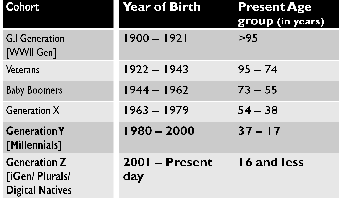
     In this modern era, we are finding it difficult to cope up with different people as their attitude, behavior, performance are different.  To manage this problem effectively we have to understand the different generations. The cohorts are classified as follows.

Generation Cohert

People who are born before 1944 are called as Veterans and  GI Generation. They are also called as Traditionalists or Silent Generation

People who are born during the year 1944 to 1962 are called as Baby Boomers

People who are born during the year 1963 to 1979 are called as Generation X.

People who are born during the year 1980 to 2000 are called as Generation Y or Millennials.

People who are born during the year 2001 to 2010 are called as Generation Z or iGen or Digital Natives.

People who are born after 2010 are called as Generation Alpha.

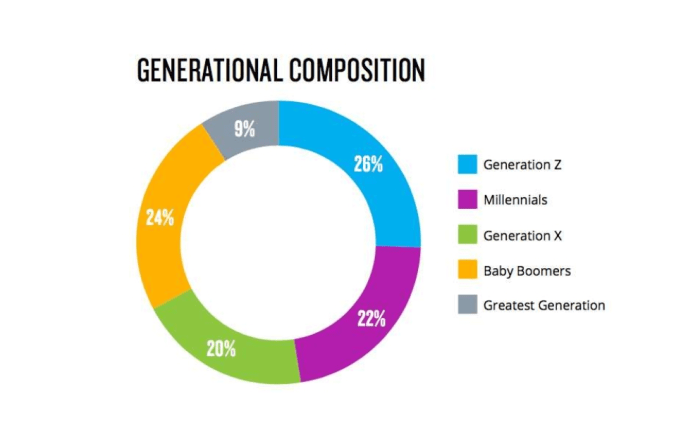
The Current generation composition is as follows

Generation Composition

Greatest Generation is 9% of the total population

Baby Boomers is 24% of the total population

Generation X  is 20% of the total population

Generation Y is 22% of the total population

Generation Z is 26% of the total population

Generation Z have the ability to work on 5 Screens at a time and they spend more than 40 % of the time outside the school in computers, Tab and Mobile.  Generation Y can work on 3 Screens at a time.  Generation Z are self directed Researchers.  They use YouTube, Social Media for research assignments. They use online lessons for studying.  Generation Y are Narcissistic, the concept of taking Selfie photos shows that they are self centered. Generation Y has the attitude to switch jobs as they like.  They don’t work in an organization for a long period of time. More than 50% of Generation Z has the ambition to become entrepreneurs.

The List of Gen Y Billionaires and Gen Z Millionaires are given below:

Gen Y Billionaires

31 years – Mark Zuckerberg – FB Co-founder and CEO – $41.6 billion

31 years – Dustin Moskovitz – Facebook’s 3rd employee – $9.3 Billion

34 years – Yang Huiyan (Female) of China – $5.9 billion Realestate

33 years – Eduarardo Saverin – Facebook Co- Founder – $5.3 Billion

32 years – Scott Daniel Duncan – cofounder of enterprise products company – Energy partnership – $5 bilions

25 years Evan Spiegel – Snapchat CEO worth $1.9 Billion

26 years Bobby Murphy – Snapchat Co-founder$ 1.8 billion

Gen Z Millionaires

Justin Bieber – most famous teenagers turned millionaire entrepreneurs – he moved out from his popstar status to tech field- since age 12 – Forbes measured his two years earnings at $108 million

17 years – Nick D’ Aloisio – prodigy App developer – sold his News Summarising app – Summly to Yahoo for $30 million

19 years – Brian Wong- Mobile rewards network called Kiiip – a game changer in mobile advertising – made over $15million

Cameron Johnson – first business at age 9, making invitations for family parties, later worked on internet ad space and greeting cards Net worth more than $1 million before completing his high school

15 year old – Madison Robinson – Fish flops apparel – made over $1 million Sales

The General Characteristics of Generation Y is

  • Independent
  • Techno Savvy
  • Sense Of Immediacy
  • Entrepreneurial
  • Innovative
  • Confident
  • Self-reliant
  • Flexible
  • Optimist
  • Multitasking
  • Socially Conscious
  • Collaborating
  • Preference to be entertained
  • Valuing Integrity
  • Demand autonomy

The General Characteristics of Generation Z is

  • Greater dependence on Technology
  • Embrace social learning environment
  • Enjoy classroom discussion
  • Career focused in early college life
  • Rather than passive learners, they prefer to be fully engaged and be part of learning process
  • Learn by doing
  • Comfortable with digital tools (Skype/ online forums)
  • Learning isn’t limited to classroom
  • Self reliant and career driven

Salesforce Workforce

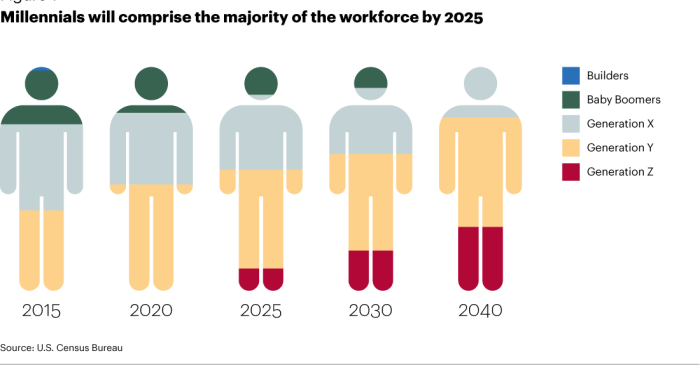
The above figure shows the workforce of generation changes that is going to take place in the forth coming years.

Understanding different generations will help us effectively manage in a work environment.


Finance– A Vital domain knowledge for today’s managers

Finance– A Vital domain knowledge for today’s managers

-S.SARAVANAN, Assistant Professor

Sankara Institute of Management Science

Finance is considered as life line of any organsation and managers with finance knowledge are vital for the efficiently managing the financial resources. The manager’s decision has greater impact on how business is conducted on daily basis and the future goals. The term finance is related with investment decisions of manager’s and how he is able to generate better return for the investment with minimize cost from operation.

The manager constantly interacts with different head of departments and understands how each functional area’s have influence on the financial resources of the company. The manager’s understanding of the various financial instruments helps in distribution of resources efficiently.

Basic of financial knowledge

  1. Financial goals of the company
  2. Wealth maximization for the shareholders
  3. Higher return for capital invested
  4. Financial knowledge of funds flow & cash flow
  5. Interpretation of company financial statement – balance sheet, P&L Account, Ratios
  6. Understanding working capital
  7. How to financing working capital
  8. Increase the operating cycle
  9. Improving the cash flow
  10. Understanding – types of cost, cost behavior – fixed & variable cost
  11. Regulatory structure of the nation- companies Act, Income Tax, RBI, SEBI
  12. Budget control mechanism
  13. Cost involved in generating funds for long & short term finance
  14. Pricing methods

These are the basic concepts that today’s manager face in financial world of the company. Each manager has to have hands on experience in finding the relationship between the business goals and financial goals. The interpretation of the financial statements will have a greater degree of efficient in managing financial resources. The financial performance of company is based on the profit & expenses, how manager are able to decrease cost with control over the cost in a financial year. Today’s manager should possess decision making skills based on the basics of financial management for better financial health of the company. Understand the basics; follow it meticulously for the growth of the company.

Perception

     Perception     

Nishanthi.S
Assistant Professor

Sankara Institute of Management Science(SIMS)

       Mind has the power to capture the things which we see even that which the power of our eyes cannot do.  The level of thinking and imagination of the perceptional level which the individual could vary accordingly can be of a wide area.

        From a single thought, the imagination and the perception level could easily be found with the wide verity of results which could be adaptable by the various managers whichever, whomever, whatever or however the need depends on. Identifying the need and requirements of the concerned matter and issues which have been following certain nature and rules could be easily bend and made into use of the seeker.

      The power of perception which enable us to move forward in life which are both, positive and negative which could be used to overcome some points where the use of the particular concerned sort of energy could be on the perspective level where the implementation​ is done. Using of such types of perspectives in day to day life of a manager may have different type of after effects or result which could have the explanation that viewing from the particular point will be most appropriate or apparently there could be also other way in which the results will be effecting.

               The ability of an intellectual is to think of a situation and to view the scenario from different angles of life which may be depending upon the experience and wisdom that has been possessed by the management candidate. The origin of such kind of varying level of thoughts and explanations could be extraordinary or may be damaging.

Well, obviously it differs accordingly based on the nature and dependency of variables and the independency of the environment. The high peek of thinking could be developed by various ways and thus the improvisation on developing such different level of perception could be also achieved, although it depends up on the individual’s capability.

               The mannerism and the individual’s accountability on that could be developed as a gradual process such that the particular one could adapt the environment or could just blend into the surrounding which they inhabit. The way which they adopt such changes could be also depending up on the perspective level which the individual carries within him or her.

The way which the level of perception differs is that whether the particular individual is able to come up with any sort of ideas or thoughts which is apart from the normal one he/she sees or observes. This kind of ability is not often to be found. When such sort of ideas is been found or discovered the potential gained from these explanatory views with certain outcomes will comparatively much more effective than that of the normal one. As a result, the levels of observation also vary accordingly which in turn will have an effect on the overall result.

      Considering the perception, the ability to make the managers, individual or a group of individual, which differ in the net result, will always be accountable for something which is always new and creative. The new lifestyle which the modern society have been developing on the causes of different reasons is all about the perception which is in the different part of the world and their way of living satisfies the combinable diversity  and nature of living  in the particular​ environment.

It was someone point of view to rub the rocks and make the fire out it, then for the easiness the method was developed so that the effort will be reduced. All these sort of difference which takes place is because of some motivation or goal which shows the observer to get a new way of thinking by which the achievement could be possible. This way of thinking was always possible with the way of thinking capacity which is more over different from the existing methods and ways that are being traditionally followed. Changing the course of the followed one and taking the new one will have the obstacles to be faces but for the success these problems has to be overcome at once.

       The knowledge from books or resources will not always help for such reasoning. The perception level or the power of a particular manager is to view thing in different way, will be produced only if the creative ability is there. By such ability only these nature could be harvested fully.

     For example, 6 and 9 are two numbers which could be read as either of them by keeping it upside down. It’s the matter by which the point of view is been implemented. So the way of thinking and the observation is all that matters.


Stress Awareness Day – a must for Corporate

Stress Awareness Day – a must for Corporate

Dr. Priya Kalyanasundaram

Professor, Sankara Institute of Management Science

           Stress it is the body’s way of responding to any kind of demand or threat. When you feel threatened, your nervous system responds by releasing a flood of stress hormones, including adrenaline and cortisol, which rouse the body for emergency action. Today workforce are experiencing high level of stress due to  long working hours, workload, tight deadlines, high targets, type of work,  pressure to perform, etc,. This leads to fatigue, irritability, poor communication, and quality problems/errors. Due to this they may feel frustrated or “burned out” when they are having problems with peers or customers. It can be a real killer, both in the workplace and in our day life. When we are faced with a challenge, or a threat to our well-being, the body experiences stress. According to the study conducted by WHO, it has been estimated that 57 million people are affected by depression. ISMA Survey published on 1st November 2017 has  revealed that 94% of people experience work-related stress but only 32% of them feel that they can speak to their manager about it. Stress levels for women employees are higher, particularly in India, where they are managing both home and office equally. Work-related issues contribute more to people’s stress levels than difficulties regarding relationships, health and finances combined. The death of Vineet Whig, former COO of South Asia division of Encyclopedia Britannica, who fell down from the ventilation shaft from the 19th floor of a building early this year, sent alarm bells ringing in many corporate offices. They need to conduct Stress Awareness day to make them aware of the stress in our lives and how it affects the health.

History of Stress Awareness Day

Stress Awareness Day was established by the International Stress Management Association (ISMA) to help give information on stress, and strategies on how to address it for both companies and individuals. This organization is focusing on helping employers by providing comprehensive guidelines for establishing a program within their organization, and individuals by looking after their health and well-being on a day to day basis. It is an opportunity to start looking after yourself and your life, and to break down the individual stressors in your life. Failure to deal with stress can lead to serious health problems, including high blood pressure, heart diseases, and a decline in your immune system. Once you start experiencing these symptoms they can landslide into each other, resulting in growing sickness, and by extension, more stress. It’s truly a self-feeding problem, and a cycle that is necessary to control to enjoy our lives.

How to Celebrate Stress Awareness Day

It can be celebrated by organising meditation and yoga sessions, creating a culture that promotes stress management, managing the mindset that says I don’t have time to manage stress. Managing your stress while it’s happening, Take time to examine your life and find out where all the stressors lie and start looking into taking steps to remove them or find ways to mitigate them. Many corporate are trying to break the pattern by bringing in yoga experts and organizing activities they are also ensuring that canteen serve healthy and hygienic food for the employees. Stress can be a killer, don’t let it take one more day from your life, act now and start removing stress from your life.


Qualities of an Ideal Teacher (Requirements for the Perfect Teacher)

Qualities of an Ideal Teacher (Requirements for the Perfect Teacher)

Dr. S. Sundararajan


Every teacher and faculty must do a reality check of each of these qualities sincerely. Being a teacher is not so easy, tick off what they have. Pick up what they don’t posses. Improvement happens. We need to be better and better at teaching and also teaching – learning process. Learning is infinite in this information age and knowledge economy.


Along with sound foundation of knowledge, skill, dedication a teacher, a mentor (and any leader) should have

  • 360o eye sight to see positive of anything before negative
  • Helping hands
  • Clear mind
  • Clean heart
  • Genuine and selfless concern about  students, colleagues and all
  • Mother’s heart to forgive the student
  • Quest for quality
  • Crystal clear behavior


A teacher should be always devoted to develop his student that he becomes better and advance version of the teacher himself. Apart from above all of these, Teacher is a very honest person and a very hardworking person. As a teacher touches the future, he/she should have a strong ‘future-orientation’.


Following are the essential orientations strongly recommended:


  1. Quality-orientation
  2. Social-orientation
  3. Scientific-orientation
  4. Moral/ethical/spiritual-orientation
  5. Result-orientation


Inspiring personality and motivational skills are reflecting the impact on the students and their lives over a period of life.  The students who were taught in 90’s were asked to give feedback in 2016. Most of them reported upward trend in their lives.


As Swami Nanda states: Education is manifestation of qualities already inherent in a student. So, a teacher’s job is to facilitate so that the student may exhibit those qualities for the benefit of society, nation, world, family and self. Personal traits good, but what those personal traits give to the society is also important.


What makes a good Teacher Great?


All teachers are good! Great teacher scores the highest points on two fronts: task and students rapport. Only the great teacher begets another great teacher.

  • Good in sharing his knowledge on the subject as relevant to the students whom he is teaching. So, before teaching, he should learn himself.
  • Good as Counselor to the students and also to their Parents. Good as Mentor to the students.
  • Positive outlook, capacity to listen, possesses and practice life skills and finally devoted to the profession.


A great teacher is the one

  • Who identify the strengths and weaknesses of a student and deal accordingly.
  • Teacher finds the dream of each student and leads him to achieve it.
  • He / She update the knowledge every day especially in specialized areas.
  • Teacher learns the latest teaching pedagogy/ Heutagogy of teaching.
  • Add on skills; especially communication and inter-personal relationship.
  • Innovativeness in teaching style.
  • Never hurt a student for no fault of theirs. Never be rude to a student when they show genuine gratitude and love for a teacher. Never make your own assumptions as a teacher and never put a student down so much that it makes the student get into emotional or psychological stress
  • A student can always feel the enthusiasm and interest shown by the teacher for student development. Genuine teachers – the vibes can be felt by the student community
  • As a teacher be loving and encourage students, be kind to them and not harsh. A few messages from a teacher like ‘hi how are you’, ‘hope all well at your end, what are you doing these days ‘goes a long way for a student. The ego or pride of a teacher doesn’t go up or down if it is sent to a student.
  • Last but not the least, just like we teachers expect remembrance, gratitude from our students, even as students they feel good if as teachers we show that little bit of care and concern for them.


Apart from our education and knowledge we posses, as a faculty, I believe the following qualities are very essential for a teacher;


  • Vocation for teaching. (passion – natural or self-created)
  • Patience and perseverance. (purity too)
  • Updated with the new teaching methods and techniques.
  • Keep learning and educating self.
  • Approachability and the ability to develop an excellent rapport with our learners.
  • Self-assessment.
  • Effective management (self and class) and communication skills.
  • Organized and well prepared for the lessons.
  • Ability to explain and clarify things in a simple way.
  • Treat the learner fairly.
  • Ability to anticipate learners’ difficulties/problem. (Coming down mentally to the level of students’ mental level)